


Working from home in Malaysia has become an integral feature of the modern workforce. More often, companies from various industries consider flexible working arrangements as long-term strategies rather than temporary solutions. Employees prefer schedules that support personal needs, reduce commuting, and improve productivity. This trend reshapes the workplace and continuously shapes the course of hiring, business planning, and economic development.
Many organisations in Malaysia are now seeing remote work as a competitive advantage. Companies that do not offer flexible practices risk losing their talent to employers who look after the priorities of autonomy and employee wellbeing. Younger workers expect digital tools and flexible environments that allow them to perform tasks effectively. Hence, remote working has evolved into a core component of the future of work in Malaysia.
Evolution of Remote Work in Malaysia
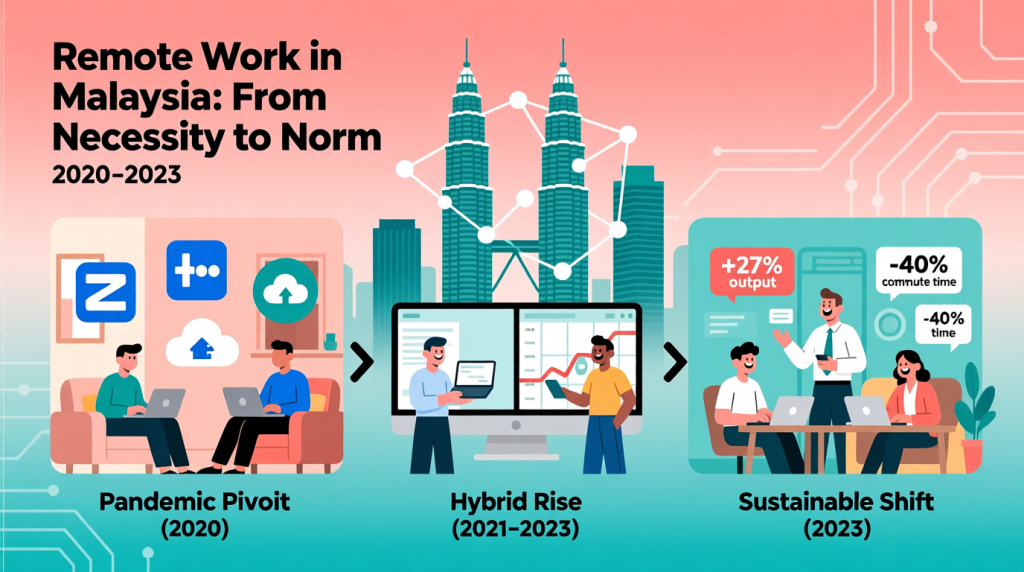
Remote work gained strong traction when businesses instituted work-from-home arrangements during the global health crisis. Most employers noticed higher productivity and reduced operational costs, thus encouraging them to continue flexible arrangements even after the restrictions ended. Employees experienced better balance and improved focus, having avoided long travel times and frequent office interruptions. The early success has played a major role in shaping today’s remote work expectations.
By 2023, hybrid models had become widely adopted. Major companies such as Grab Malaysia and AirAsia Digital launched schedules that allow employees to split time between the office and homes. These models thus helped companies attract millennial and Gen Z professionals who prefer flexible routines instead of strict office-based hours. Hybrid work has become one of the strongest factors influencing job satisfaction and employee loyalty.
Technology also accelerated the adoption of remote work. Digital tools such as Microsoft Teams, Zoom, Google Workspace, and cloud-based project management platforms support real-time collaboration. These are means for scaling up with minimum infrastructure investment by a startup or small business. This opened opportunities for remote operations across many sectors in Malaysia.
Why Remote Work Continues to Grow
Savings are a major motivator for both employees and companies. Workers save on costs pertaining to fuel, transportation, food, and parking. Some even choose to live on the outskirts of major cities since they now do not have to commute daily. The company saves on office rent, utilities, and other costs associated with maintaining physical workspace. For instance, Fusionex reported that it had significantly reduced its operation costs after adopting a hybrid setup.
The growth of remote work is also supported by the preferences of Gen Z workers. Young professionals from Malaysia appreciate flexibility, autonomy, and meaningful tasks that align with personal goals. The majority of employees in their twenties and late twenties actively seek out full-time or partial remote opportunities for employment. Employers who respond to these expectations gain access to a wider talent pool and improved retention.
International professionals have been attracted to the Malaysia Digital Nomad Program. The program allows foreign workers to conduct remote work in Malaysia without much hassle over relocation. Cities such as Kuala Lumpur, Penang, and Langkawi became destinations for digital nomads seeking affordable living, strong internet access, and active lifestyle options. This contributes to the growth of Malaysia as a flexible working destination.
Coworking spaces are expanding across the country. From modern facilities by brands such as Common Ground to WORQ, Colony, and EV Hive, these provide professionals with options apart from home offices. They offer high-speed internet access, private rooms, shared desks, networking events-things that make them ideal for maintaining productivity by separating personal and professional environments.
Key Benefits of Remote Work
Remote work provides a better work-life balance for employees. Workers can organize schedules around family needs, personal routines, and health activities. All this flexibility maintains mental wellbeing and reduces levels of stress. Many Malaysian employees show improved happiness once they have better command over daily tasks and the environment.
Access to global job opportunities has become more accessible. Malaysians are applying for remote jobs offered by companies in the industries of technology, marketing, finance, and design all over the world. This allows the employees to receive international incomes while still residing in Malaysia. These opportunities power up local talent and encourage skill development.
Productivity increases when people work from home. Without daily travel and office distractions, employees can get things done faster and maintain high focus. In a survey conducted by Jobstreet Malaysia, many remote workers believed they perform better while working from home. This greatly benefits the companies in terms of improved output and increased employee engagement.
When employers support flexible arrangements, employee retention improves. Companies offering remote work reduce turnover and build stronger loyalty. Similarly, Maxis and Maybank have acknowledged that hybrid options help in building a more supportive work culture and thus long-term commitment from skilled professionals.
Challenges to Be Addressed By Malaysia
Internet access remains uneven, with urban Petaling Jaya and Kuala Lumpur having fast service compared with slower access in rural communities. That means not everyone has equal ability to partake in remote work opportunities. The path to long-term development of Malaysia’s digital workforce goes through increasing its national connectivity.
Complete labor regulations for remote work have not yet been established in Malaysia. Most companies establish their guidelines on monitoring, equipment support, and work hours expectations. Such inconsistency could affect employee protection and employer responsibilities. More clearly stated policies will help build a better and secure framework for the future of remote work.
It might be difficult for remote employees to differentiate their working time from personal time. Without clear boundaries, workers risk burnout and stress. A study by PwC Malaysia reported that many remote workers struggle with the ability to switch off at the end of a workday. This could be prevented by encouraging healthy routines and setting limits on communications.
When teams operate remotely, there is a definitely increased risk in cybersecurity. Companies therefore need to invest in secure lines of communication such as VPNs, encrypted platforms, and data protection training. This reduces the potential for breaches and secures sensitive information. Employers will thus require strong digital policies to keep operations safe and reliable.
Economic Impact of Remote Work
They develop the economy through tourism, hospitality, and long-stay rentals. The local businesses that had been previously focused on traditional services like cafes, hotels, and coworking now center their services around flexible workers. This leads to new income sources and further enables lifestyle business development.
Coworking and hospitality continue to grow. Modern workspaces attract locals and foreigners in need of decent places for meetings and performing daily tasks. Innovation is encouraged by the trend, as well as new models of service support. Remote workers are regarded by many business owners as a key market group.
Freelancing is on the rise, especially among Malaysians. Many platforms, such as Fiverr, Upwork, and Workana, are connecting local talents to global clients. This trend promotes entrepreneurship and diversification of income sources. Many Malaysians use freelance work to develop new skills and build personal brands.
Remote-first models help startups and small businesses grow with fewer overhead costs. These companies can also access international customers without necessarily having large physical offices. This flexibility encourages innovation and strengthens Malaysia’s position in regional digital markets.
Real Examples in Malaysia
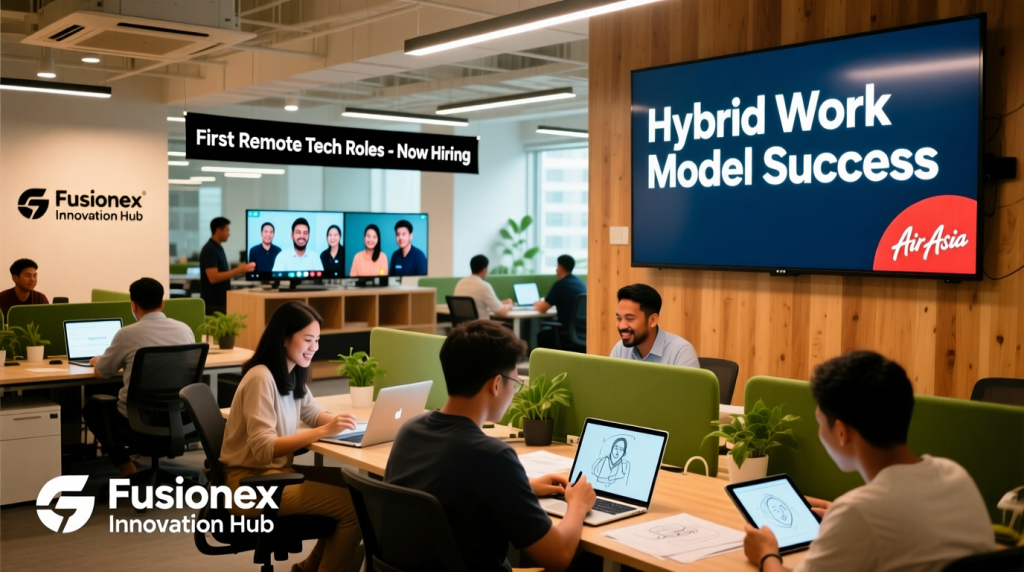
Grab Malaysia employs hybrid schedules, which help support employees who require flexibility in their routines. It has boosted satisfaction and helped retain skilled professionals. The model supports productivity and allows employees to plan their tasks more effectively.
Fusionex reported lower operational costs after reducing reliance on office space. The company also improved performance and better engagement among employees. Such benefits reflect the strength of the remote and hybrid systems whenever implemented properly.
The continuous expansion of its coworking network to new locations helps attract freelancers, remote workers, and digital nomads in this area. This expansion continues to drive economic growth and encourages the development of professional communities.
AirAsia Digital offers first-remote positions in technology and creative fields for workers. This practice aligns with modern work expectations and supports team collaboration across regions. Innovation is also being continuously fostered through flexible structures.
The Future of Work in Malaysia
The future workplace will be dominated by hybrid arrangements. Firms will increasingly employ combinations of home and office work to facilitate collaboration and grant autonomy. Employees will view flexible structures as standard benefits.
AI will continue to impact virtual collaboration in terms of time management, workflow automation, and monitoring of virtual teams. AI-powered tools will enhance efficiency and inform better decision making. This will further reinforce the concept of digital productivity in different industries.
Malaysia has all it takes to be the digital hub of Southeast Asia: a qualified workforce, strategic position, and competitive cost of living-index. These pros influence remote-first companies and international professionals.
Stronger policy development will be essential. Clear guidelines on taxation, labor rights, and digital workplace rules will underpin a safer, more stable environment for remote work, helping employees and businesses to operate confidently in the longer term.
Frequently Asked Questions
Is remote work legal in Malaysia?
Yes, remote work is allowed, but Malaysia is still developing complete labor regulations for remote environments.
Which industries do support remote work in Malaysia?
The strongest adopters include the technology, digital marketing, finance, content creation, education, and design industries.
Can foreigners work remotely from Malaysia?
Yes, the Malaysia Digital Nomad Program allows foreign professionals to work for overseas companies while staying in Malaysia.
Will Malaysia remain competitive in the remote work economy?
Yes, better internet infrastructure, skilled talent, and supportive policies will all help Malaysia remain competitive.
Conclusion
Remote work has become a long-term part of Malaysia’s workforce. Companies and employees alike continue to embrace flexible systems that support productivity, balance, and global connectivity. It further cements Malaysia’s status as a regional digital hub with great economic potential. Though there are still setbacks in areas such as internet stability, cybersecurity, and policy development, generally, the benefits abound. Malaysia is ready to lead the future of work in Southeast Asia.
Remote work will shape business decisions, talent strategies, and lifestyle choices in 2025 and beyond. Success in the next phase of work evolution depends on how well the country can adapt to changes and invest in its digital solutions.