
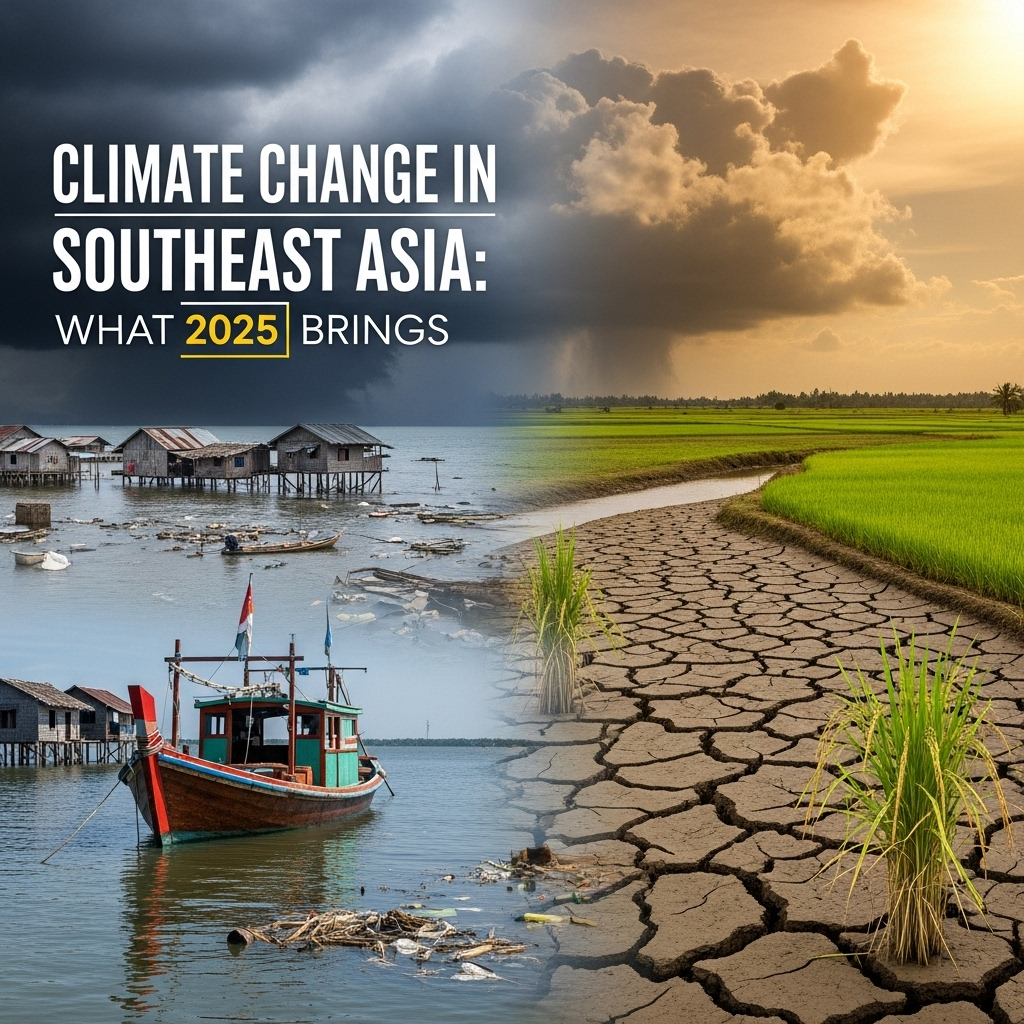

Climate change is no longer Southeast Asia’s looming spectre, it’s already arrived and worsening in 2025. The region is experiencing record highs, heavier storms, and rising food security concerns. According to the 2025 State of Southeast Asia Report by the ISEAS–Yusof Ishak Institute, 68% of respondents identified climate change as the region’s top concern, surpassing unemployment and economic recession. In a region both prone to natural disasters and agriculture-dependent, nothing could be more at risk.
Speeding Warming and Unprecedented Heat in Southeast Asia
Southeast Asia is one of the world’s most climate-exposed regions, and 2025 projections show a sharp rise in episodes of extreme heat. The World Meteorological Organization (WMO) estimates a 70% chance that global temperatures will exceed 1.5°C above pre-industrial levels within the next five years. For Thailand, Vietnam, and the Philippines, where rice cultivation is widespread, stress due to heat can reduce yields.
This is not only a food supply issue but also a public health concern. A 2024 International Labour Organization (ILO) report warned that Southeast Asia could lose up to 3% of working hours annually due to extreme heat exposure. Urban residents, particularly in densely populated cities like Jakarta, Manila, and Bangkok, are also experiencing more urban heat island impacts.
Extreme Weather Events Disrupting Lives and Infrastructure
Climate crises are also appearing in the form of rising and more frequent floods, droughts, and tropical cyclones. Coastal communities in 2025 are subjected to repeat displacements due to storm surges and flooding. Critical infrastructure such as bridges, ports, and power plants are in continuous stress, with billions worth of damages yearly.
Mekong Delta inundations and typhoons in the Philippines illustrate the enormity of recovery cost. Rural towns find themselves trapped in a cycle of disaster reconstruction and subsequently being hit again after months or years. This fosters instability and increases inequality.
Climate Change and Food Security in 2025
Perhaps the most urgent issue in 2025 is food security. Rising temperatures and unstable rainfall are disrupting planting patterns across the region. Rice, a mainstay of Southeast Asian cuisines, suffers lower yields. Fisheries, another key source of protein, experience elevated water temperatures and lower biodiversity. Palm oil plantations, vital for export, also endure lowered productivity due to heat stress.
For millions, this means dearer food and worsening malnutrition. Poor households and children are disproportionately affected, as they have poorer access to cheaper alternatives when staples are in deficit.
Health Impacts: A Growing Regional Crisis
Southeast Asia’s healthcare systems are also not immune to the effects of climate change. Rising heatwaves are causing the escalation in cardiovascular and respiratory illnesses. The spread of vector-borne diseases like dengue fever and malaria is on the increase with warmer climates creating breeding grounds for mosquitoes all year round.
Most vulnerable groups like children, the elderly, and poor rural communities are affected with cumulative risks. Limited access to health in most regions makes adjustment to these new health challenges even more difficult.
Regional and Global Climate Pressures on Southeast Asia
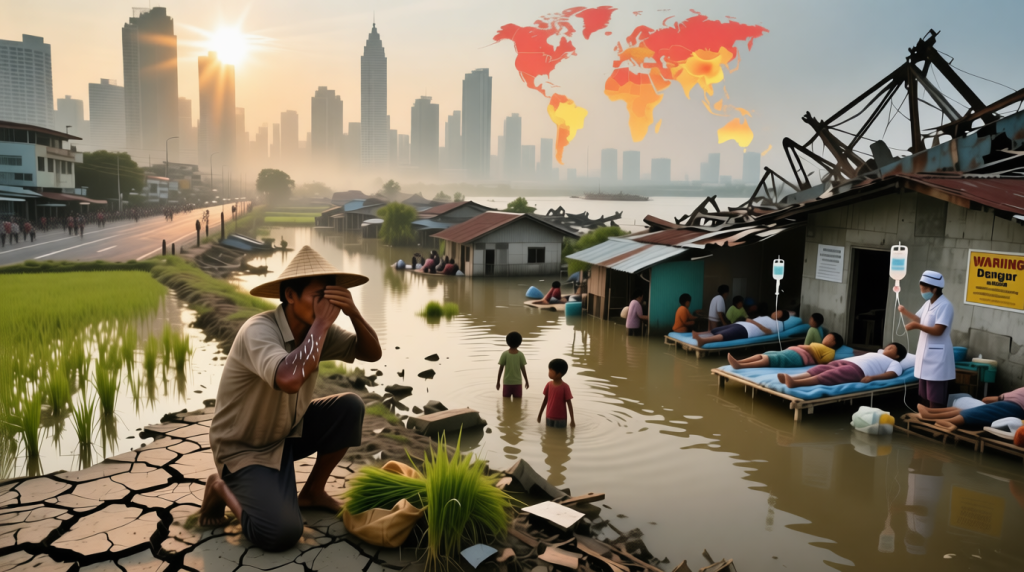
Climate change is not just reshaping ecosystems but also business and politics in Southeast Asia. The 2025 State of Southeast Asia survey revealed that climate concerns now dominate economic ones. This, in itself, is forcing governments to take adaptation more seriously.
Firms are also under scrutiny. Shareholders, regulators, and even judges are demanding firms disclose climate risks and integrate them into their governance. Boards would face legal liability if they fail to prepare for risks that can be anticipated like floods and heat waves.
At the same time, Southeast Asia urgently needs overseas finance to cover its transition to renewable energy and adaptive infrastructure. Plans for adaptation will be incomplete without external assistance.
Adaptation and Resilience: What’s Being Done in 2025
Despite adversity, there are encouraging signs that adaptation is indeed happening. Researchers are cultivating climate-resilient crops such as heat-tolerant rice to safeguard the food supply. Farmers are adopting sustainable techniques such as precision irrigation and crop diversification.
Urban areas are also investing in resilience. Bangkok and Jakarta are upgrading defenses against flooding, and green building practices are starting to spread. Improved systems for climate data allow governments to make better forecasts and prepare for extreme weather.
The Challenges ASEAN Still Faces
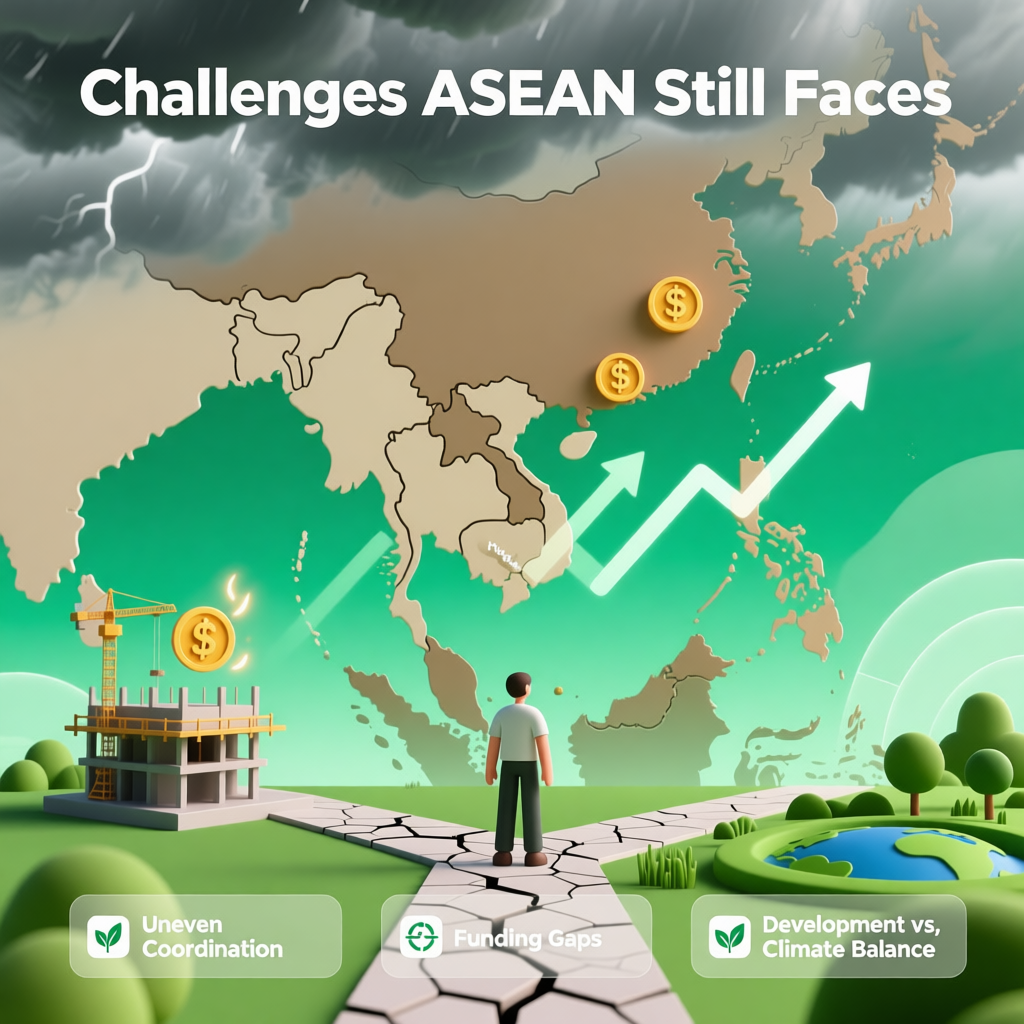
In spite of such efforts, ASEAN still faces serious challenges. Coordination between member states remains uneven and susceptible to variation in terms of political will among nations. Funding remains a problem, with most countries lacking the resources to upscale resilience projects.
There is also a delicate balance between development and climate aspirations. With hundreds of millions remaining poor, governments feel compelled to advocate for development even if it contradicts sustainability goals.
What to Watch in 2025 and Beyond
A number of developments will dictate the course of Southeast Asia’s climate in the next few years. First, the efficiency of heat-resilient crops and food system strategies will establish whether or not the region can stave off a food crisis.
Second, ASEAN’s capacity to consolidate its disaster response and harmonize adaptation policies will be tested. Lastly, investments in renewable energy and climate-smart infrastructure will determine if the region is getting into it for the long term.
FAQs on Southeast Asia 2025 Climate Change
Q: What is the biggest climate threat in Southeast Asia in 2025?
Extreme heat and its impact on food security remain the most pressing threats.
Q: How does extreme heat impact food security?
Extreme heat reduces rice yields, devastates fisheries, and stresses other crops, which raises food prices.
Q: Which Southeast Asian countries are most vulnerable?
The Philippines, Vietnam, and Myanmar are most vulnerable due to geography and agricultural dependence.
Q:How is ASEAN facilitating climate adaptation?
ASEAN coordinates regional disaster responses, promotes sharing climate information, and advocates for finance, though progress is uneven.
Q:What are the highest-priority adaptation methods for the future?
Heat-tolerant crops, sustainable agriculture, renewable energy expansion, and climate-resilient urban infrastructure hold the greatest promise.
Conclusion
Southeast Asia stands at the climate crossroads in 2025. Unseasonable heat, unstable weather, and food insecurity threats are now no longer extraordinary events but a resurgent normal. The choices taken today to invest in resilience and shift quickly or procrastinate and bear more intense crises will decide the course of the region for generations to come.
The sense of urgency is palpable: Southeast Asia must accelerate adaptation, mobilize funds, and strengthen regional coordination. Only then can it ride out the climate storm that awaits