

Cross-border QR payments in Malaysia jumped to RM967 million in the first half of 2025, with about 11.8 million transactions being processed. This proves the adoption of QR payments across retail, F&B, and e-commerce by both consumers and merchants. As digital payments become the new normal, Malaysia continues its journey toward a cashless economy and makes cross-border digital transactions faster, easier, and more convenient.
QR-based smartphone payments will resolve the issues of using cash, various cards, or the need to change currencies. They will definitely be a reliable, time-saving, and easy way to pay, which will be in favor of both businesses and consumers.
Understanding Cross-Border QR Payments
Cross-border QR payment enables consumers to make a transaction with a merchant situated in another country by just scanning a quick response code. The system is being increasingly utilized by tourists, online shoppers, and retail outlets to accept international digital wallets. Visitors can directly pay through local banking apps or e-wallets without going through any hassle of exchanging money.
The retailers and F&B outlets have shown operational ease and speeded up checkouts while e-commerce platforms are enabled to process international payments efficiently. Such payments cause less inconvenience, accelerate the pace, and make the process quite reliable for all stakeholders.
Growth and Key Statistics in First Half of 2025
According to reports quoting Bank Negara Malaysia, cross-border QR payments reached RM967 million in the first half of 2025, with approximately 11.8 million transactions. These were driven by main factors such as ASEAN tourists, e-commerce platforms, and Malaysian SMEs adopting QR payments. Some of the widely used platforms were DuitNow QR, GrabPay, Alipay, and WeChat Pay, reflecting strong trust in digital payment systems and the increasing trend of QR code payments in 2025.
This data points to increasing consumer confidence and underlines how QR payments are becoming integral to both the retail and service sectors in Malaysia.
Benefits of cross-border QR payments
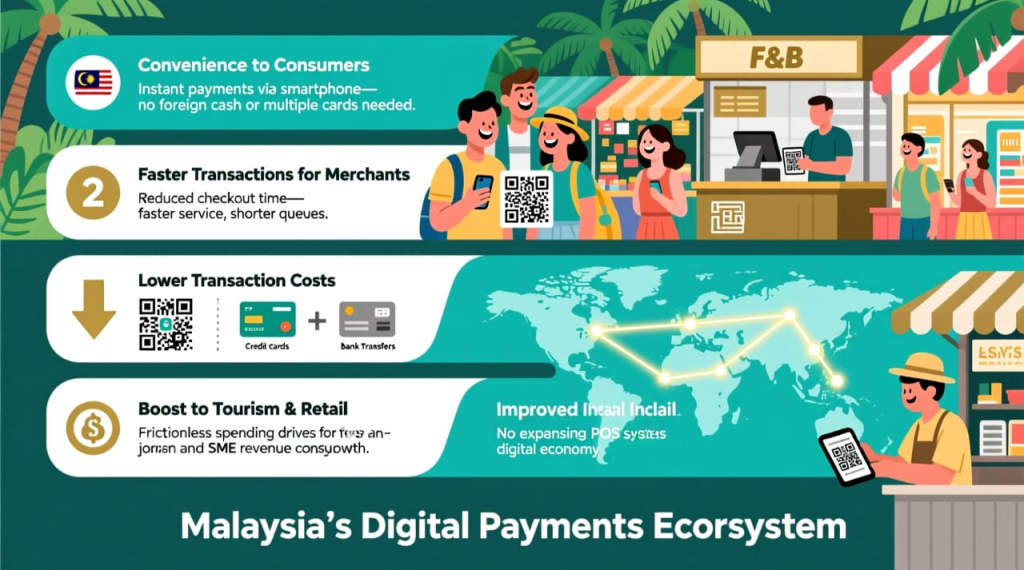
Convenience to Consumers
The fact that consumers can make instant payments through their smartphones and not have to carry multiple cards or foreign cash is a great incentive. International tourists easily shop in Malaysia, making the experience faster and easier, avoiding all hassles of exchanging currencies.
Faster Transactions for Merchants
QR payments speed up transactions for a merchant, reducing waiting times and queues at the checkout. Retailers and F&B outlets face smoother operations; their employees can serve more customers in an efficient manner, thus raising overall business productivity.
Lower transaction costs
Cross-border QR payments are often cheaper compared to credit card transactions or bank wire transfers. This saves money on the part of both merchants and consumers while encouraging wider adoption of digital payment systems.
Boost to Tourism and Retail
With this, international visitors will finally be able to spend without friction, boosting the tourism industry and retail growth of Malaysia. Meanwhile, these SMEs will have access to foreign customers with very minimal setup, expanding business opportunities and revenue potential.
Improved Financial Inclusion
Small businesses can activate QR payments without any investment in expensive POS systems, hence giving all types of businesses entry to digital payment infrastructure and thereby allowing them to participate in the cashless economy.
These benefits would contribute towards Malaysia’s efforts to further bolster a strong digital payments Malaysia ecosystem-one that supports consumer convenience, business growth, and the wider digital economy.
Challenges and Considerations
Notwithstanding the growth, various challenges beset cross-border QR payments: for adequate security systems that prevent fraud, seamless integration of apps and banks is needed to facilitate smooth transactions; a lot of consumers and merchants remain ignorant about the use of QR payments; and technical issues in the process, like problems in connectivity or incorrect scanning, disrupt deals. Continuous education for users and merchants is crucial to foster trust and ensure wide usage.
Safe Use Tips
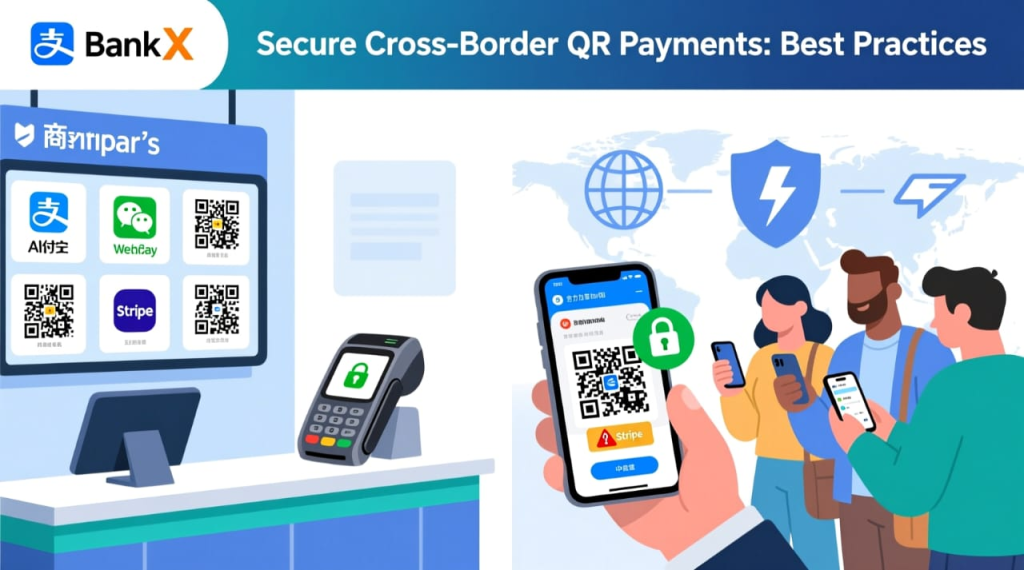
The critical best practices entail the acceptance of multiple QR platforms by merchants, clear display of QRs, and updated and secure POS systems. Similarly, consumers should verify the authenticity of the QR code before scanning, use official banking or e-wallet apps, and regularly monitor transactions for suspicious activities. This will ensure cross-border QR payments remain safe, seamless, and convenient.
FAQ – Cross-Border QR Payments Malaysia 2025
1. Will overseas QR payments work via Malaysian bank apps?
Yes, provided the merchant supports the scheme for cross-border QR acceptance.
2. Are cross-border QR payments safe?
Yes, for official apps and verified QR codes.
3. Which platforms are most widely accepted?
DuitNow QR, GrabPay, Alipay, and WeChat Pay.
4. Can SMEs benefit from cross-border QR code payments?
Absolutely, QR payments offer SMEs access to an international customer base at minimal setup.
5. Are there transaction fees for cross-border QR payments?
Fees are usually lower than credit card transactions but vary by platform.
Conclusion
The cross-border QR payment of RM967 million recorded in the first half of 2025 reflects Malaysia’s rapid move into adopting this technology, as evidenced by the recording of 11.8 million transactions. QR payment methods are changing the way consumers and corporates interact with digital payment systems in Malaysia. Faster, safer, and more efficient transactions will go a long way in establishing Malaysia as a cashless economy, boost tourism, and develop the SME sector. With further education, secure systems, and multi-platform adoption, QR payments are bound to become one of the key modes of cross-border transactions in the years to come.