
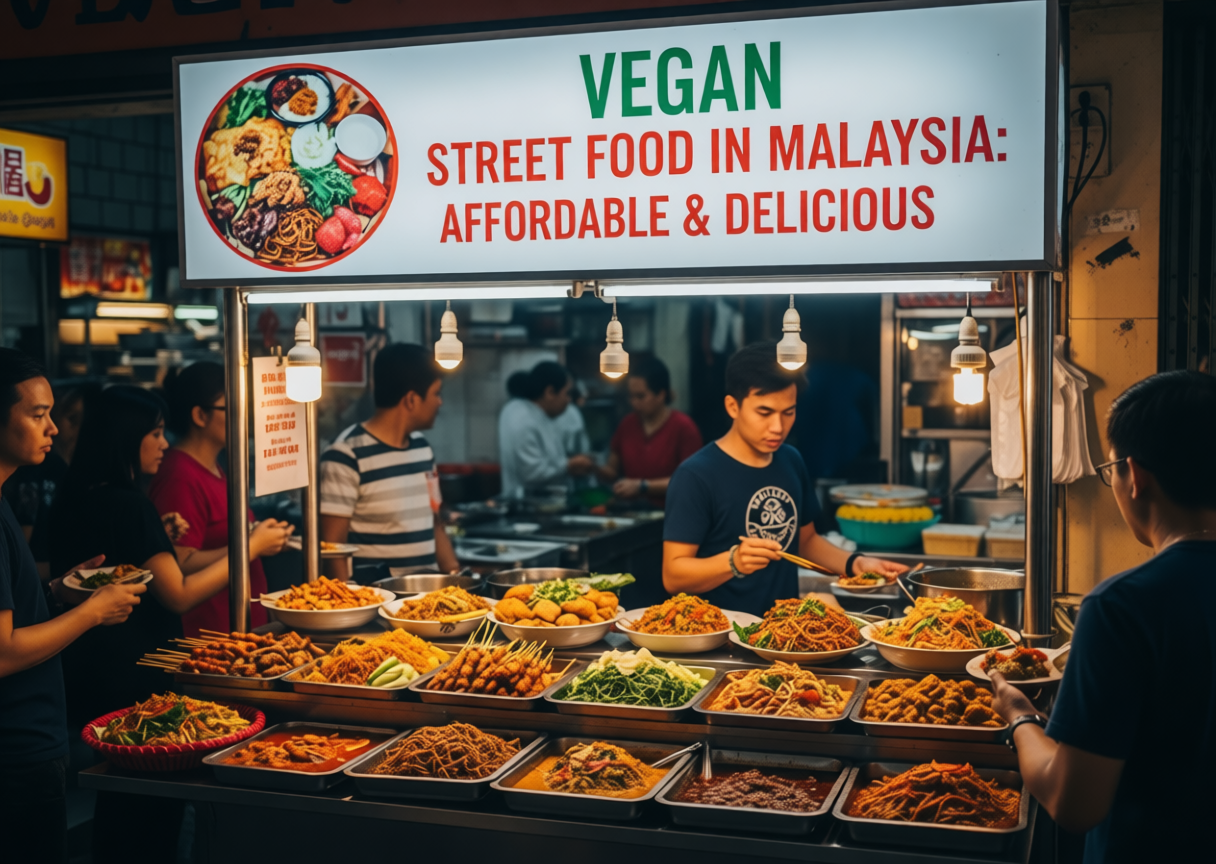

Introduction: Malaysia’s Plant-Based Revolution
By 2025, Malaysia’s mythical street food is no longer just about satay, laksa, or roti canai it is also vegan paradise. The once-thriving vegan niche has gone mainstream, and locals hawkers are proving that deliciousness doesn’t need to contain meat to be incredible. From Penang’s hawker alleys to Kuala Lumpur’s night bazaars, Malaysian vegan street food has turned into a thrilling melting pot of culture, creativity, and affordability.
Inspired by health awareness and greenism, the new generation of vegan-friendly vendors blends old-time food with fresh plant-based innovation. The result? Cuisine that is delectably Malaysian but perfectly balanced with global dietary modifications.
Classic Vegan Street Food Across Malaysia
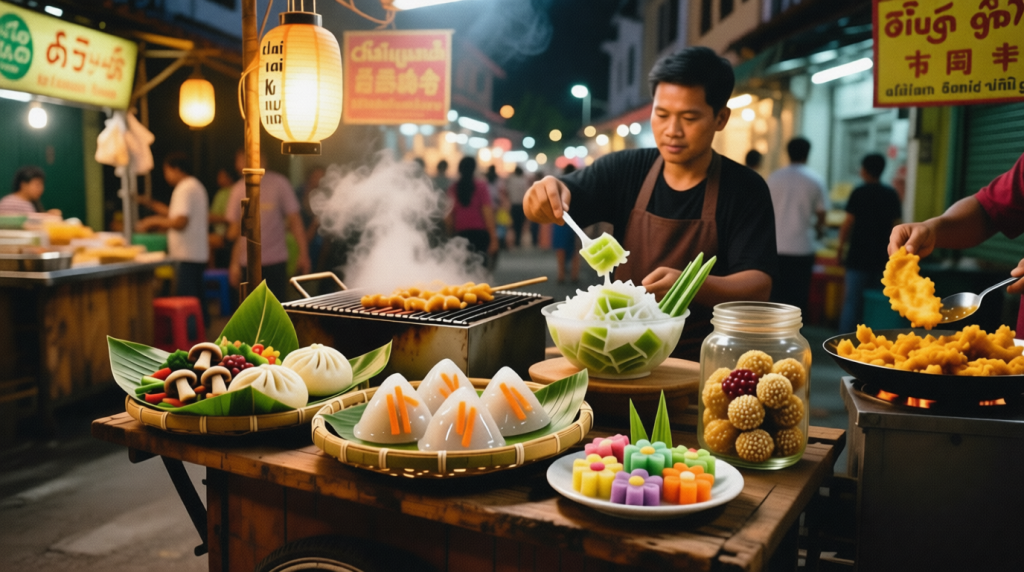
Malaysia’s multi-racial culinary richness which are Malay, Chinese, and Indian is easily adaptable to veganism. In Penang, the street food paradise of Asia, vendors have long been offering plant-based staples without even announcing them as vegan. Chai kuih, a delicate rice dumpling stuffed with turnip and carrot, lightly steamed and given a brushing of garlic oil, is one such local favorite. Neighboring it, soft bao buns filled with mixed vegetables and mushrooms are simple, homey, and totally meatless.
If you’ve got a sweet tooth, Penang’s dessert scene delivers pure nostalgia. Sesame balls with red bean paste, crispy on the outside and chewy within, are found in nearly every pasar malam (night market). There’s also mochi, a soft, glutinous rice snack, and an array of nyonya kuih, colorful bite-sized desserts made from rice flour, coconut milk, and pandan.
Meanwhile, Kuala Lumpur street food vegan treats are the essence of local excess. Take cendol, for instance a shaved ice treat draped with coconut milk and palm sugar syrup, naturally dairy-free and fantastically tropical. Pisang goreng, or banana fritters, is another oldie as eternal: golden brown, crunchy, and vegan by default. All these treats prove that Malaysian vegan food is not so much commercial in nature, but rather cultural , it’s been on the local menu for generations.
Affordable & Accessible Plant-Based Food
One of the most attractive things about Malaysia’s vegan street food scene is that it’s affordable. Everything costs between RM2–8, allowing locals, students, and visitors with any budget to indulge in its delights. Even in 2025 when inflation around the globe influences the cost of dining, Malaysian street food is still a value paradise and taste sensation.
At places like George Town’s Chowrasta Market or Kuala Lumpur’s Jalan Alor, increasingly vendors are including labeling on the menu for vegan-friendly shoppers. Some of them even have English and Mandarin glyphs declaring “100% Vegan” a small nod towards inclusivity for tourists.
Beyond large cities, Ipoh and Melaka are among small towns jumping on board. More and more food trucks and night market vendors are now including vegan versions of their bestsellers in their menus to fulfill mounting demand from health- and ethics-conscious younger Malaysians for what they consume.
Modern Vegan Twists Defining 2025
What is so thrilling about 2025 for Malaysian vegan cuisine is the manner in which traditional hawkerts are reinventing old favorites. Some of the standout new creations rewiring the streets are:
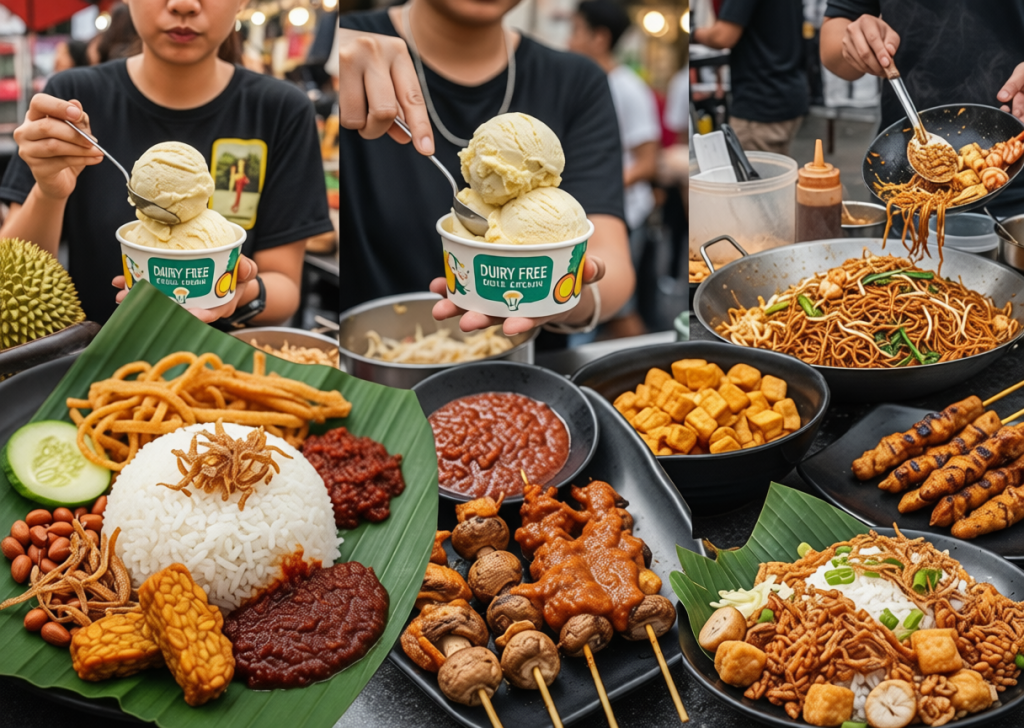
In Kuala Lumpur, nasi lemak veganized with tempeh sambal is a breakfast must. The rich coconut rice, zesty sambal, and crispy anchovy substitute opened from fried tempeh is the pinnacle of plant-based harmony comfortingly familiar yet revitalized.
Over in Penang, stalls are pulling long lines of customers for mushroom-based vegan satay marinated to perfection. Charcoal-grilled and served with authentic peanut sauce, the flavor rivals its meat counterpart.
For dessert, you can’t beat dairy-free durian ice cream, an innovative twist for Malaysia’s most polarizing fruit. Vendors use coconut or oat milk to create a decadent texture without sacrificing richness.
Even wok-fried staples are being veganized. Char kuey teow, once chock-full of prawns and eggs, now appears in vegetable guise with tofu, mock seafood, and bean sprouts — smoky, saucy, and full.
Such creative turns are a result of Malaysia’s growing culinary creativity, as local taste meets conscious eating.
Why Vegan Street Food Thrives in Malaysia
Four words summarize the success of Malaysian vegan street food: culture, diversity, affordability, and accessibility.
Malaysia’s multicultural heritage ensures that plant-based food already exists in ethnic cuisine from Indian roti and dhall to Chinese-style stir-fries and Malay coconut desserts. The abundance of natural ingredients such as tofu, tempeh, coconut, pandan, and banana makes vegan food authentic as well as environment-friendly.
As important as anything else, veganism here is populist rather than elitist. You won’t need to dine at fancy vegan restaurants; you can enjoy the same taste on the street corner for a few bucks. That accessibility makes Malaysia’s vegan movement different, it’s not about exclusivity, but everyday affordability.
For Gen Z and eco-travelers, here’s why Malaysia stands out: a place where vegan food can taste local, social, and attuned to real community life.
Notes on Spots to Eat Vegan Street Food in 2025
Although vegan food is more ubiquitous than ever, having an idea of where to find it makes the experience all the better.
Penang’s George Town is still the go-to place. Lebuh Kimberley and Armenian Street areas have stalls peddling vegan dumplings, curry mee, and even tofu “duck rice.” Most operate from 7:00 AM to 10:00 PM, and most vendors are willing to clarify ingredients if politely requested.
Visit Kuala Lumpur and head straight to Jalan Alor or Taman Connaught Night Market — two of the most lively food streets in the city. Amidst the ocean of food stalls, some have vegan versions of national dishes. Keep an eye out for Green Love Corner and Plantify KL, top brands among vegan buyers in 2025.
For a tech-savvier option, look for HappyCow or Google Maps ratings to discover vegan stalls near you. Vegan Facebook groups like @veganmalaysia and @klveganfinds also put up weekly recommendations for pop-ups and new street food stalls.
Cultural Significance: Veganism with a Malaysian Soul
Malaysian veganism is more than dietary, it’s a declaration of cultural harmony. A lot of Malaysian Buddhist and Hindu cultures already have meatless foods on religious holidays, having had a seamless transition into the modern era of veganism.
Street food stall owners, who have operated for decades, are adapting recipes without losing their authenticity. From substituting eggs with tofu skin in rojak or replacing dairy in teh tarik with oat milk, the creativity and appreciation for heritage are evident.
Furthermore, Malaysia’s push toward sustainability has influenced local enterprises to reduce food waste, employ biodegradable packaging, and encourage plant-based agriculture and that small stalls might be big game-changers.
FAQ: Vegan Street Food Malaysia 2025
Q: How easily available is vegan street food in Malaysia?
A: Yes, especially in Kuala Lumpur and Penang. Vendors now openly promote plant-based alternatives, and knowledge is massively higher than before.
Q: How costly is vegan street food in 2025?
A: They typically range from RM2 to RM8 per meal, varying by location and ingredients. It’s one of the best affordable ways of healthy eating when traveling overseas.
Q: Are vegan options native to Malaysian food?
A: Yes. The majority of dishes keep traditional spice blends, cooking techniques, and textures; they just substitute the animal bits with plant-based alternatives.
Q: Are vegan stalls clearly recognizable for travelers?
A: Increasingly yes. Vendors have “Vegan” or “No Meat” boards, and food app-delivery also labels vegan options.
Q: Which cities offer the best street vegan experiences?
A: Penang for authentic flavors, Kuala Lumpur for variety, and Melaka for heritage-inspired vegan snacks.
Conclusion: The Future of Vegan Food in Malaysia
In 2025, Malaysia’s plant-based street food experience proves that culture and kindness can sit together on the same plate. With its rich blend of heritage dishes, trendy plant-based reimaginings, and budget-friendly offerings, the country delivers one of Asia’s most exciting vegan experiences.
From sesame balls in Penang to vegan nasi lemak in KL, every mouthful is a party of diversity of taste, yes, but also of ideology. For foodies, locals, and visitors, Malaysia’s streets are now lined with dishes that are affordable, authentic, and 100% meat-free, reminding the world that sustainability can indeed feel like home.