

Introduction
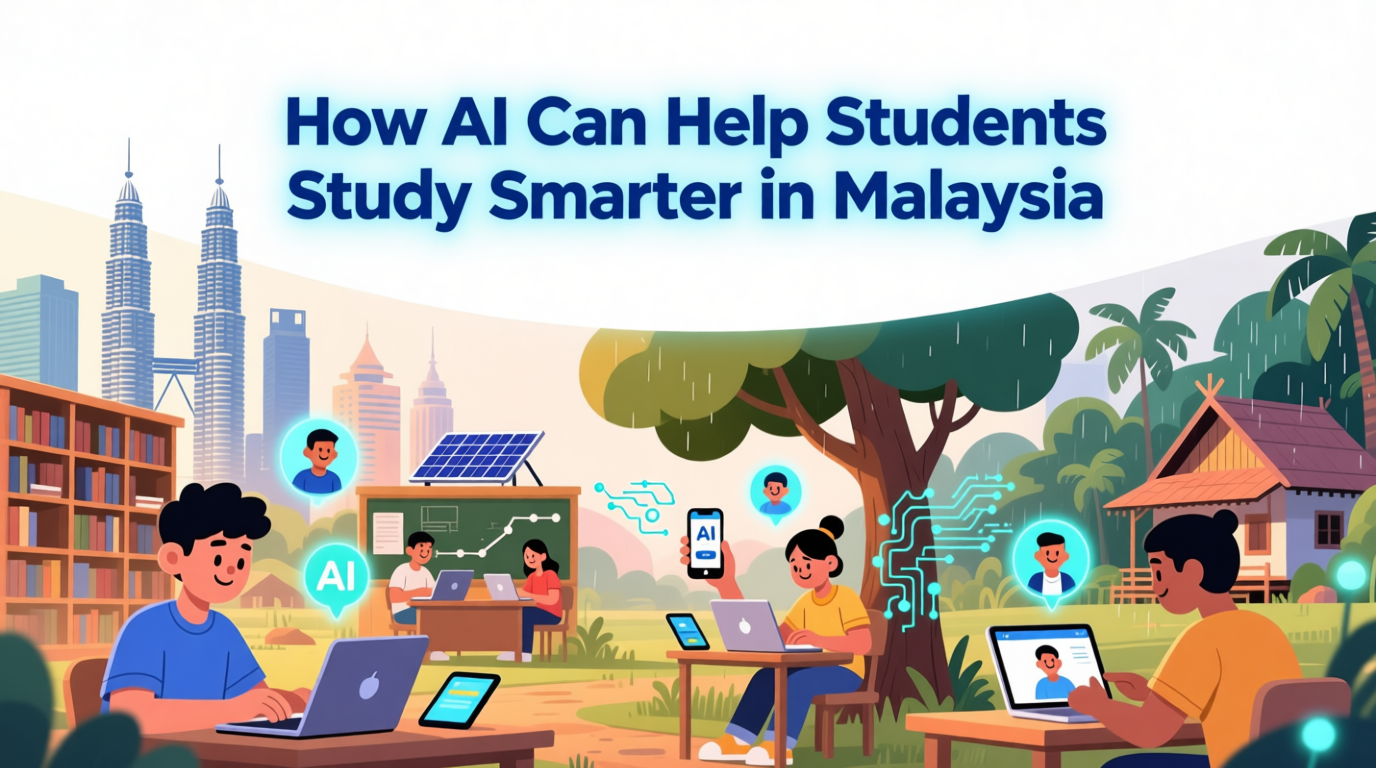
From an idea of the future, Artificial Intelligence has now grown into a study tools AI for Students shaping how them learn today in Malaysia. The increasing demand for academic excellence and fast-digitizing schools and universities have encouraged students to find smarter ways of learning. AI supports students in understanding difficult topics, planning their study routines, and getting immediate clarification during self-study sessions. Malaysian learners are beginning to see AI not as a shortcut but as a companion that strengthens confidence, focus, and performance.
This article sets out how AI can help Malaysian students study smarter, the tools shaping the classroom experience, the challenges one should realize, and the future of AI within the national education system. Each section gives practical insights to help students make the best use of AI while keeping learning authentic and effective.
Why AI Matters for Malaysian Students
Most Malaysian students go through a challenging academic environment: The SPM and STPM exams are events in their lives which will further determine the course of their decisions. These, along with university admissions and scholarship routes, create a greater urge to understand the subjects rather than just memorizing their contents. AI provides a learning experience that feels more personal and adaptable. Students who relied on tuition centres and revisions in groups can now have digital tools tailored to their speed, strengths, and weaknesses.
Malaysia is further expanding its digital education plans through both government and private sector initiatives. Schools and universities are increasingly installing learning platforms with AI features that track progress, identify gaps in learning, and provide improvement strategies. This puts Malaysian students among the first cohorts in the world exposed to modern learning tools that offer study support with much greater accuracy and ease.
Key Benefits of AI for Students in Malaysia
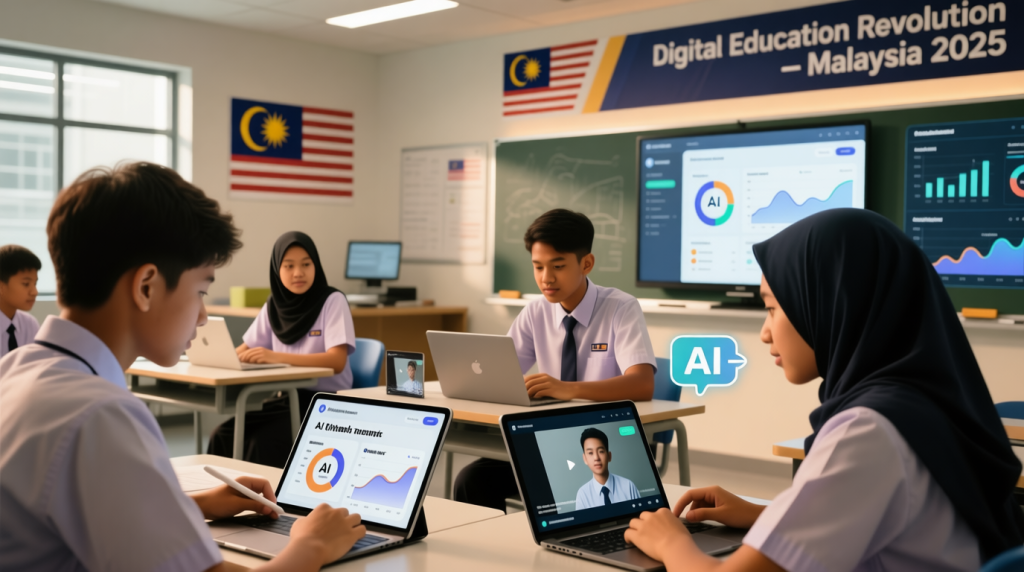
AI has various benefits that make learning more effective for Malaysian students. The most important advantages are the possibility of personalized learning, whereby AI-powered platforms can study a student’s performance and pinpoint concepts he or she struggles with, then give explanations matching the level of understanding. Such assistance would build confidence and make revision more meaningful for students in areas such as mathematics, science, or languages.
AI also helps in time management by giving suggestions for study schedules, organizing daily activities, and sending reminders, hence minimizing last-minute rushes. Many students find them useful during exam seasons when managing too many subjects is stressful. Feedback is instantaneous, adding another layer of support because waiting for teachers or friends to clarify doubts is no longer necessary. They can ask questions at any time and get an explanation to walk them through the right steps. Language assistance is also relevant in Malaysia, where switching between English, Malay, and Mandarin is common. AI translation and grammar tools facilitate clarity in writing and reading without slowing down the learning process.
Best AI Tools That Help Students Study Smarter
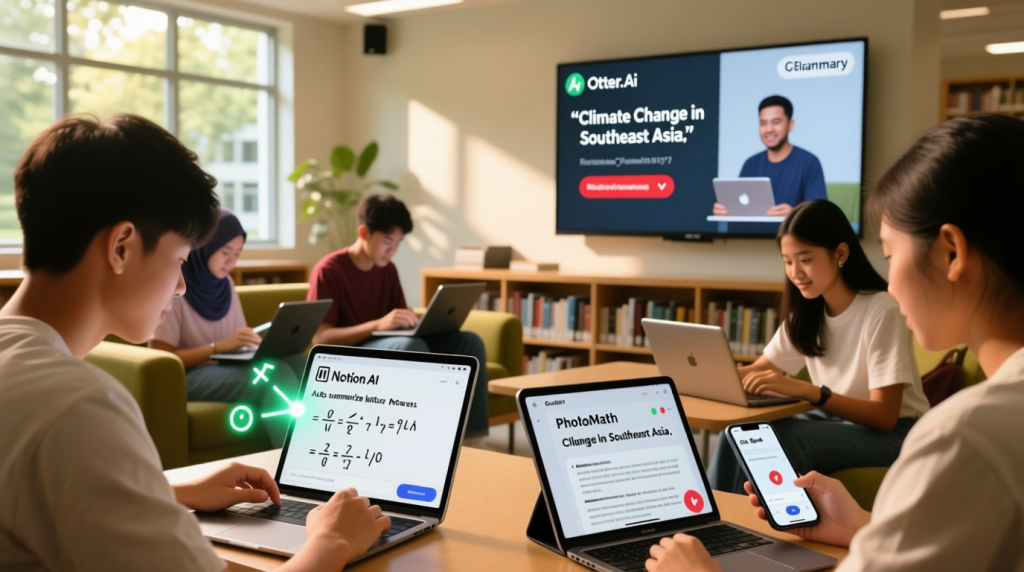
Students in Malaysia in the present context depend on a wide range of AI-powered applications that simplify daily study routines. AI note-taking tools, such as those in Notion or Evernote, can summarize long lecture notes into cleaner versions that are easy to revise. Similarly, students who attend long university lectures or fast-paced tuition classes benefit from tools that extract the key points so they can focus on understanding rather than copying.
AI research and homework assistance tools such as ChatGPT, Perplexity, and Elicit rapidly explain complex subjects in bite-sized ideas. These tools facilitate students in making outlines for essays, generating research directions, and even checking that their understanding in a subject aligns with what is expected academically. Language learning tools like Duolingo AI and Elsa Speak are an asset, especially for students who are preparing for university-level English or learning additional languages.
For mathematics and science, tools like Photomath and Khanmigo take students through each step of a problem, allowing them to find where they went wrong. Productivity software, including Otter for transcription and Grammarly for the correction of written material, helps students complete assignments more quickly on laptops or smartphones.
How AI is transforming classrooms in Malaysia
Classrooms in Malaysia are gradually incorporating AI to improve teaching quality and smoothen the process of learning. Many universities, such as the University of Malaya, Universiti Sains Malaysia, and Taylor’s University, are integrating AI into their learning management systems and administrative tasks. These tools enable educators to keep track of attendance, monitor progress, and give students personal academic recommendations. When integrated with online learning platforms, AI supports hybrid teaching styles that allow students to learn inside and outside the classroom.
Several EdTech startups in Malaysia also develop AI tools according to the national curriculum for primary and secondary levels. Some schools have piloted the digital platforms that generate practice questions tailored to the performance of each student. This, meanwhile, positions the educational system for the future whereby lessons are tailored toward the needs of individual learning as teachers focus on guidance, mentorship, and critical thinking.
Challenges of Using AI in Student Learning
However, AI also presents challenges, which students and educators in Malaysia must cautiously address. The biggest concern is over-reliance: students may only learn to get answers from AI-generated solutions rather than learning to analyze or solve problems independently. This habit can diminish critical thinking if not corrected early on. Academic integrity remains another challenge because AI can easily generate essays or homework answers. Students should make use of AI for understanding concepts and not copying directly.
Other issues include the digital divide, where not all students have equal access to stable internet or smart devices. While urban areas may enjoy faster adoption of resources, rural students may face limitations. Privacy and data security also deserve attention, as many AI-powered tools do collect personal information. It is important that students are informed about what data these platforms store and how they use it. These concerns being addressed ensure AI remains a positive addition within the learning environment.
Tips for Effective and Responsible Use of AI by Students
Students will achieve the best results with AI when they use it as a guide but not a replacement for real learning. While AI can support revision, give examples, and explain difficult subjects, students should practice questions and exercises themselves. Information provided by AI has to be cross-checked from textbooks or reliable online references to eliminate occasional inaccuracies in the responses. By combining this with the students’ thinking, they are able to have a better understanding rather than taking short cuts.
Another important step is building digital literacy. Understanding how AI works helps students recognize both its strengths and limitations, as well as best use cases. This skill prepares students for a future where most industries will be influenced by AI. Equally, responsible use balances AI support with real reasoning so that students become more confident learners.
Future of AI in Malaysian Education
In the next few years, AI will play an even larger role in Malaysian education. Future classrooms may feature virtual learning environments that merge AI with immersive experiences. Students will interact with AI mentors that track their progress from primary school to university, offering customized study paths, revision recommendations, and real-time feedback. Malaysia’s push toward a ‘digital first’ education system will also accelerate the use of adaptive platforms that deliver personalized lessons in real time.
With AI becoming more prevalent, students will benefit from an education system that focuses on understanding, creativity, and long-term development. Preparing them for this shift starts with learning how to use AI responsibly today, particularly for revision, research, and skill building.
FAQs
Q: Can AI replace teachers in Malaysia?
AI can never replace a teacher because educators give emotional guidance, moral support, and develop critical thinking that AI cannot provide. AI is only a supporting tool, while the teacher remains central in the process of learning.
Q: What are the best free AI study tools for students?
Free helpful tools include ChatGPT, the free version, Grammarly for writing improvement, Duolingo for language learning, and Photomath for mathematics solutions.
Q: Can Malaysian students safely depend on AI to do their homework?
It is safe when used responsibly. Students should use AI to understand explanations rather than copying answers directly into assignments.
Q: How should parents guide children in using AI?
Parents could also encourage children in using AI for clarification and revision, maintaining the balance of screen time, and making sure that children always verify AI-generated responses from textbooks or teachers.
Conclusion
AI is creating new avenues for Malaysian students to learn more effectively through personalized lessons, instant guidance, and smarter time management. In support of their goals, the technology helps students who want to improve performance in demanding subjects, strengthen language skills, or build better study habits. But learning works best when students use AI responsibly and keep sharpening their own thinking-and problem-solving abilities.
As Malaysia heads towards a digital-first education landscape, AI will turn out to be a powerful enabler that will help students prepare for an increasingly competitive, technology-driven future. By choosing appropriate AI tools and using them judiciously, Malaysian learners can study wiser and lay stronger foundations for academic and personal growth.