

The face of the Malaysian policies workforce is changing, with increasing interest in freelancing, gig work, and entrepreneurship. Understanding the policies affecting Malaysian freelancers and entrepreneurs has become indispensable for anyone pursuing financial security, legal compliance, and sustainable growth. From freelancer taxation Malaysia to social protection schemes and gig economy Malaysia policies, these rules shape how independent workers conduct business and how entrepreneurs expand their businesses.
Digital compliance, including e-invoicing Malaysia freelancer and SST Malaysia freelancer, adds another layer of responsibility but concurrently bolsters professionalism and credibility. Similarly, initiatives such as the National Entrepreneurship Policy Malaysia, the Self-Employment Social Security Scheme SESSS Malaysia, and i-Saraan EPF Malaysia provide systematic support and long-term benefits for the self-employed. The following guide explains the major Malaysian policies affecting freelancing and entrepreneurship in Malaysia for the year 2025/2026.
Taxation and Financial Compliance for Freelancers and Entrepreneurs
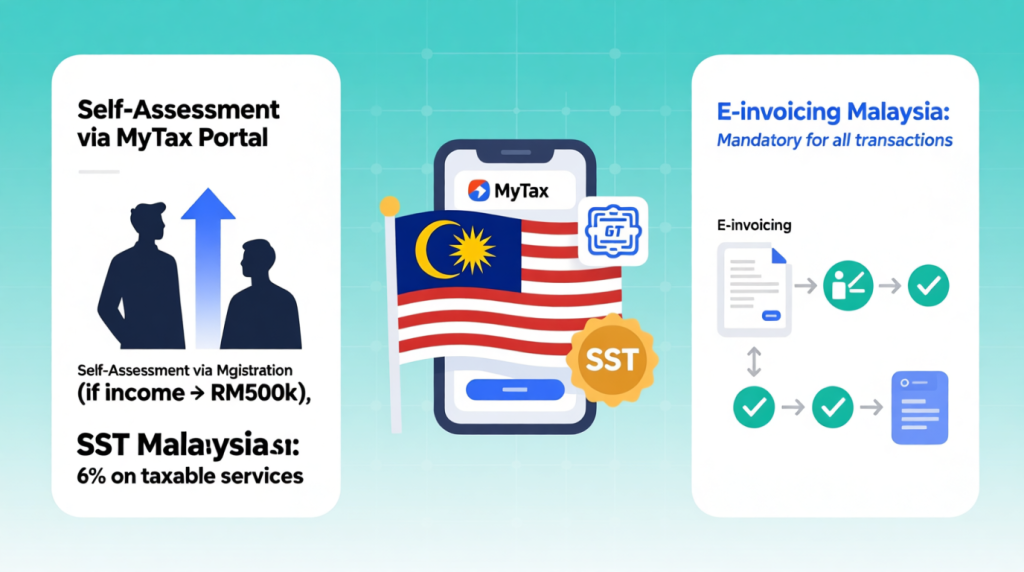
Unlike the deductions for salaried workers, freelancers and entrepreneurs in Malaysia have to pay their own taxes. LHDN requires all independent workers to declare income through the MyTax portal using a self-assessment system. Understanding freelancer taxation Malaysia ensures proper compliance, reduces the risk of penalties, and strengthens credibility with clients and partners.
Some freelancers and small business owners may also be required to register for Sales and Service Tax (SST). Services whose incomes exceed the threshold and fall into taxable services must charge six percent SST. Knowledge of SST Malaysia freelancers’ obligations avoids legal implications and assures accurate invoicing.
E-invoicing Malaysia freelancers are gradually implementing verified digital invoices for every transaction. E-invoicing improves transparency, reduces tax gaps, and consequently prepares freelancers and entrepreneurs for the new challenges of a digital-first economy. While it may require additional administrative steps, this policy builds trust with clients and sets the standard for professional operations.
Social Protection and Retirement Options for Freelancers
One of the disadvantages freelancers face is the lack of health and retirement benefits afforded to employees. Due to this, the government developed the Self-Employment Social Security Scheme SESSS Malaysia under the SOCSO. SESSS covers work-related accidents, occupational diseases, and temporary loss of income. Self-employed in Malaysia depend on this very program for financial security.
Besides that, freelancers may voluntarily contribute to EPF Malaysia’s i-Saraan, a retirement savings program administered by the Employees Provident Fund. i-Saraan fosters long-term savings habits through matching government incentives, enabling freelancers to build up their nest egg while preserving their independence. Together, SESSS and i-Saraan fill the gap in benefits between salaried employees and independent professionals.
Taking part in these programs complements better freelancer compliance in Malaysia and provides financial stability in times of uncertainty; hence, giving them more confidence to manage risks and plan their retirement.
Gig Workers Bill and Future Legal Protection
Malaysia is getting ready to enact the Gig Workers Bill Malaysia, which will offer added protection for freelancers on platforms. The Bill will provide guidelines for fair contract terms, ensure proper mechanisms for disputes, and set up a specific Gig Workers Tribunal. This would strengthen their legal standing while preserving the flexibility that makes freelancing attractive.
It also indicates a broader trend of policy formulation that addresses the needs of freelancers in Malaysia, recognizing the economic contribution that gig workers make and giving it a legal framework. Once in effect, the bill will offer consistent protection and set precedents that may influence other freelance sectors.
National Entrepreneurship Policy and Supportive Initiatives
Entrepreneurs benefit through the National Entrepreneurship Policy Malaysia, which touches on five key areas of interest: innovation-driven growth, inclusive participation, human capital development, access to financing, and restructuring of the ecosystem. This provides a systematic plan for developing competitive and sustainable businesses.
Complementary efforts, like the Social Enterprise Accreditation (SE.A) program led by KUSKOP, provide access to financing, partnerships, and recognition for social enterprises. KUSKOP also provides training, mentorship, and digitalization programs that encourage the adoption of IR4.0 technologies as ways of ensuring competitiveness in regional and global markets. Entrepreneurs that align with these initiatives meet standards of compliance as Malaysian entrepreneurs, therefore improving their credibility and potential for growth.

Key Government Bodies and Compliance Platforms
Freelancers and entrepreneurs have to work with the following agencies to stay compliant with:
Suruhanjaya Syarikat Malaysia (SSM): For the registration of sole proprietorships, partnerships, and companies.
LHDN / MyTax Portal: For income tax declarations, self-assessments, and e-invoicing compliance.
Royal Malaysian Customs Department: To check for SST registration and follow-up.
SOCSO: For social security contributions through SESSS.
Understanding these platforms means that Malaysian policies for freelancers can adhere to all the legal, financial, and credibility-enhancing requirements within their work.
Opportunities and Challenges Moving Forwards
Refreshed Malaysian policies outline real opportunities for freelancers and entrepreneurs alike. Adhering to freelancer taxation Malaysia and social protection schemes bolsters legitimacy, protection, and financial stability. In turn, this creates structured programs supporting innovation, access to funding, and ecosystem development for entrepreneurs.
These challenges include the cost of administration, adapting to e-invoicing Malaysia freelancers, and the financial burden resulting from voluntary contributions. Without collateral or established credit history, accessing finance as an entrepreneur might be quite problematic. Awareness remains key; hence, understanding gig economy Malaysia policies and changes in regulation could help reduce these challenges.
In summary, Malaysia is gradually creating a supportive ecosystem where freelancing and entrepreneurship can complement traditional employment with both flexibility and security.
FAQs – Policies for Freelancers and Entrepreneurs in Malaysia
Q: Do freelancers need to pay tax in Malaysia?
Yes, freelancers do have to declare their income through the portal MyTax under the Self-Assessment System. Understanding freelancer taxation Malaysia ensures compliance and avoids penalties.
Q: What is the difference between SESSS and i-Saraan?
SESSS provides work-related protection against accidents and temporary income loss, while i-Saraan EPF Malaysia allows for voluntary retirement contributions with government incentives.
Q: Will the Gig Workers Bill cover all freelance jobs?
The Gig Workers Bill Malaysia is mainly focused on gig workers who are platform-based, but its principles might later extend to wider policies for freelancers in Malaysia.
Q: Should I register my freelance work with SSM?
Yes, it does, since freelancers’ registration in Malaysia helps meet the regulations, ensures legal recognition, and strengthens credibility for contracts and client engagements.
Q: How does e-invoicing pertain to freelancers and small entrepreneurs?
E-invoicing to Malaysia freelancers improves transparency, compliance, and record-keeping. It enhances trust in business transactions while supporting professional growth.
Q: What are the financial protections available to freelancers?
Freelancers can join Self-Employment Social Security Scheme SESSS Malaysia for accident coverage and i-Saraan EPF Malaysia for retirement savings.
Conclusion- Getting Ready for Malaysian policies for Freelance and Entrepreneurial Future
The economy of Malaysia is driven by both freelancers and entrepreneurs. So, understanding Malaysian policies affects the growth and compliance of Malaysian freelancers and entrepreneurs in matters such as freelancer taxation Malaysia, social security programs, gig economy Malaysia policies, and National Entrepreneurship Policy Malaysia.
Emerging frameworks, like Gig Workers Bill Malaysia, and digital compliance, such as e-invoicing Malaysia freelancers, will help generate a professional, reliable, and future-ready ecosystem. Through awareness, compliance with regulations, and supportive programs, the freelancers and entrepreneurs can thus secure themselves, strengthen their businesses, and thrive within Malaysia’s evolving digital and economic landscapes.