


Employer deducts EPF but not paying the contributions to KWSP, a problem increasingly reported by Malaysian workers as more cases of non-remittance come to light. The EPF, commonly referred to as KWSP, is responsible for the long-term financial security of retired persons. Every month, a certain percentage of salaries is contributed both by employers and employees. When these contributions, along with yearly dividends, are combined, they help an individual maintain a stable lifestyle during retirement.
Yet a troubling number of employers don’t pass along the deducted EPF to KWSP. Reasons vary from financial strain and sloppy administration to outright misconduct. This not only breaks the EPF Act 1991 but also disrupts retirement planning. Employees who don’t watch their contributions closely can lose substantial parts of their retirement savings, including the compounding dividends that build up over time.
This piece examines why EPF contributions go missing, ways to spot missing payments, practical steps of recovering them-including filing a complaint with the KWSP-and the enforcement KWSP may pursue against non-compliant employers.
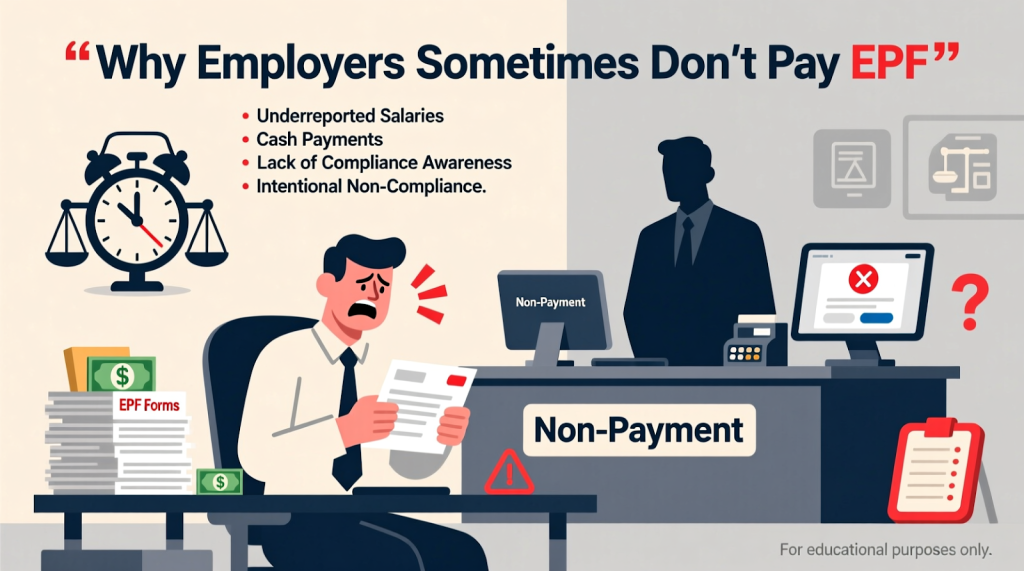
Why Some Employers Don’t Pay EPF
Employers may fail to remit EPF after deducting from salaries for several reasons. Understanding these helps in telling temporary delays from real problems.
The financial difficulties : a shortage of cash, falling revenues, or very high operational costs-can delay these EPF payments to meet short-term obligations. Though some of these delays can be unintentional, any non-payment is against the law in Malaysia and places employees at risk.
Administrative errors: Payroll errors, employee record errors, and ignorance regarding the EPF schedules are reasons for missed payments. The payroll is probably outdated to this date, and staff poorly trained, leading to repeated mistakes and late or missing EPF contributions.
Intentional fraud: Rarely, the employer may intentionally not pay any contribution to utilize the subscribed amount of employees in his business. This is EPF Act fraud and attracts a fine or imprisonment.
Remember: the EPF contributions need to arrive at KWSP before the 15th of every month. Non-compliance has serious consequences on both sides, so it is very important to check your EPF account regularly.
How to Detect Missing EPF Contributions
Payslips will show what’s deducted, not necessarily what KWSP has received. The most reliable check is your EPF i-Akaun.
Clear signs of non-payment:
Gaps or missing months : If your i-Akaun does not show contributions for one or more months, the money may not have been remitted by your employer. Every missing contribution will reduce your total savings and future dividends.
Delayed updates : Minor delays in processing occur, but if i-Akaun continuously lags behind your payslip, that is questionable.
Evasive HR responses: If HR or payroll evades answering or provides vague explanations, then mismanagement or non-compliance might be the blame.
Perform monthly checks and records there of, for early detection of discrepancies and BASIS for appropriate action.
Risks When Employers Don’t Pay EPF
The consequences extend beyond that of losing the money deducted. Various financial and legal risks crop up for the employees:
Lower retirement savings wherein every missed contribution is shrinking your EPF account balance, weakening retirement security.
Lost Dividends: Delinquent contributions forego the annual dividend that compounds over time.
Benefits access issues: EPF contributions usually affect housing loans, education funding, or medical withdrawals. Missing contributions block these benefits.
Legal and employment uncertainty: Nonpayment may indicate larger compliance issues where other rights and benefits of employees are violated.
These risks underline the need for proactive monitoring and rapid action.
What to Do If Your Employer Deducts EPF but Doesn’t Pay
If you find missing contributions, act with the following steps:
Verify contributions : Compare payslips with i-Akaun statements. Save screenshots or PDFs as proof.
Raise it internally: Speak to HR or payroll with your records. Some delays are administrative in nature; ask for a timeline for resolution.
File a complaint with KWSP : If not able to resolve internally, a formal complaint of a KWSP can be lodged through the hotline, branch, or online portal. Attach all documents for deduction and missing contributions. KWSP can investigate and enforce.
Know your rights: As an employee, you are protected by the EPF Act 1991. A non-compliant employer may be fined or imprisoned. Knowing your rights helps you act in confidence.
Quick action increases the chance of recovering missing contributions as well as lost dividends.
How KWSP Handles Non-Paying Employers
KWSP implements strict penalties to safeguard the retirement funds. The consequences on non-remittance include:
Fines and imprisonment: up to RM10,000 in fines or up to three years in prison. Repeat offenders face more severe punishments.
Recovery of contributions and dividends: KWSP is allowed to recover unpaid contributions along with the late charges, but the dividends lost during the period of delay usually are not recovered.
Blacklisting of recurrent offenders: Persistent defaulters risk being blacklisted, which may affect their reputation and, thus, their business in Malaysia.
These measures protect the employees and emphasize the timely remittance of EPF.
How Employees Can Protect Themselves
Regular checks on EPF i-Akaun : Monthly monitoring will facilitate time detection of any missing payments.
Keep records : Keep payslips, salary statements, and other HR correspondences. This documentation is crucial for when you elevate the matter or make a complaint to KWSP.
Act promptly : Do not delay in bringing the matter to HR attention or filing with KWSP. Quick action enhances the likelihood of recovering both the contributions and the dividends.
Vigilance and proper organization : help the retirement savings stay protected and EPF grow as planned.
Recent Cases & Updates
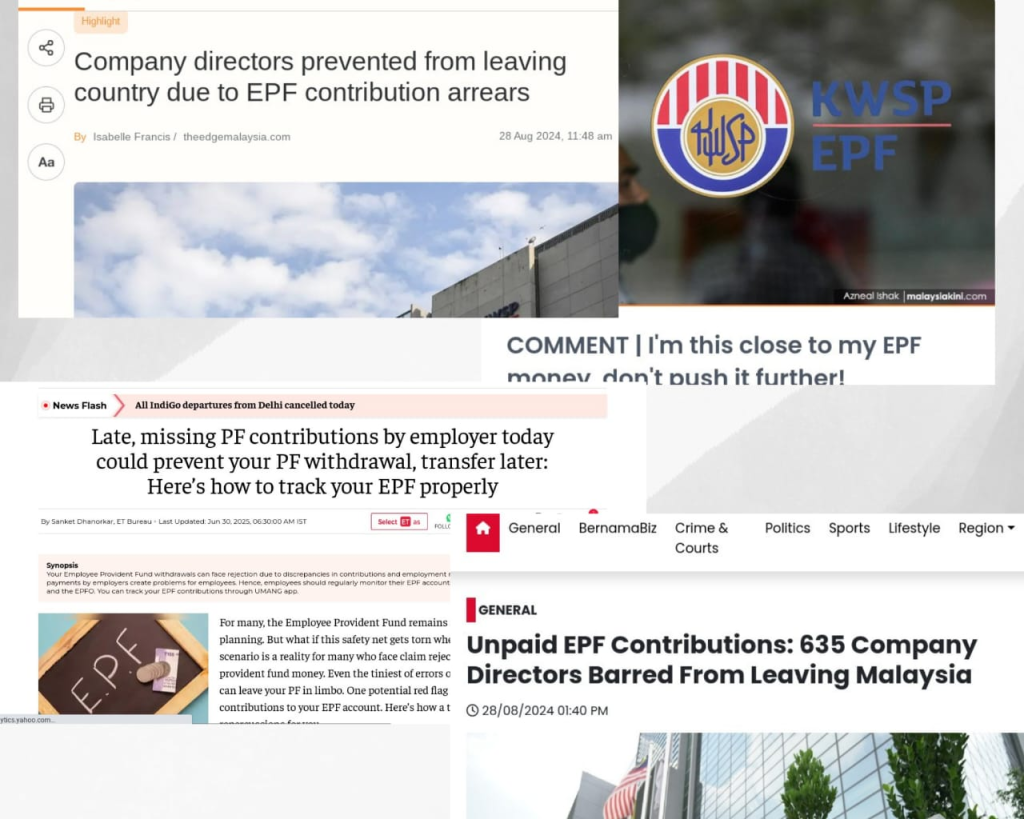
KWSP has increased monitoring and enforcement against non-complying employers. Cases in the media that mention heavy fines for non-remittance of contributions highlight that KWSP is very serious about this matter. Any backdated payments, should it happen when employers make eventual remittances, may see lost dividends that can often never be recovered. Early detection, early action. Regularly check your EPF i-Akaun and report any discrepancies immediately.
Frequently Asked Questions: Employer deducts EPF but not paying
1) If EPF for a particular month is missing,
Check with your employer first. If unresolved, file a complaint with KWSP.
2) Can I sue my employer for not paying EPF?
Yes. The EPF Act provides for legal action. KWSP can take up enforcement action.
3) Will EPF be backdated in case of late payment?
Yes, but unpaid dividends may not be recoverable in their entirety.
4) How long does KWSP take to investigate complaints?
It differs, but usually, after a formal complaint, KWSP acts pretty fast.
Conclusion
In fact, EPF is a cornerstone of retirement security for many Malaysians. Employers who deduct and fail to remit contributions become a threat to workers’ financial stability. Protect your retirement funds, recover lost contributions, and let EPF grow as it should with regular verification in i-Akaun, keeping records, and prompt action upon finding discrepancies. Your EPF is your future-protect now to secure the retirement you deserve.