

Owning a home in Malaysia in 2026 continues to represent one of the most significant long term financial commitments for households. With property prices holding firm and financing decisions closely tied to household stability, selecting the right housing loan has become just as important as choosing the property itself. Malaysian banks now offer a broad range of housing loan structures, from conventional loans to flexi facilities and Islamic financing, each designed to serve different financial behaviours and risk preferences. Understanding how these options function in 2026 allows borrowers to make informed decisions that support sustainable home ownership rather than short term affordability alone.
Why Housing Loan Decisions Matter More in 2026
Therefore, given that a home loan can span up to thirty years, small adjustments to the structure can eventually amount to serious money for the years to come. Thus, by 2026, mortgage borrowers are discovering that the best quoted interest rate is not necessarily the key to the lowest overall cost. Monthly cash flow flexibility, early settlement conditions, and refinancing potential now play a larger role in decision making. Choosing the right housing loan structure helps borrowers manage unexpected income changes, reduce long term interest exposure, and maintain financial resilience throughout the ownership period.
Understanding Housing Loan Structures in Malaysia
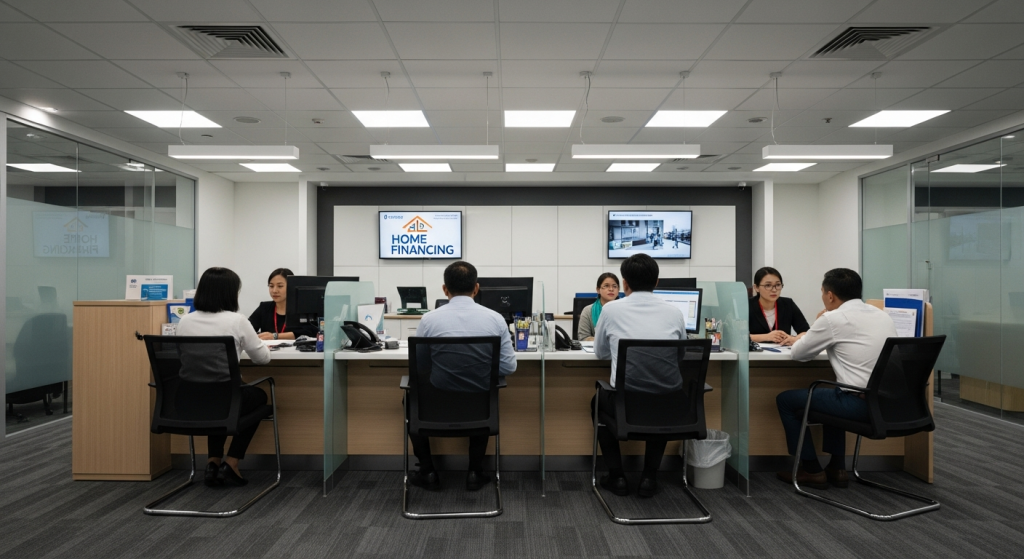
Malaysian home financing in 2026 generally falls into three broad structures that cater to different borrower priorities. Conventional housing loans remain a familiar option for borrowers who prefer straightforward repayment schedules and predictable instalments. These loans operate on fixed or floating interest rates and suit households that value stability over flexibility.
Flexi housing loans have continued to gain traction as borrowers seek greater control over interest costs. By allowing surplus funds to offset outstanding balances through linked accounts, flexi facilities offer a practical way to reduce interest without committing to permanent prepayments. This structure suits borrowers with variable income, performance bonuses, or savings buffers who want repayment adaptability.
Islamic housing financing continues to maintain strong demand in 2026, particularly among borrowers who prioritise transparency and ethical finance. Built on Shariah principles such as Musharakah Mutanaqisah, these facilities apply profit rates rather than interest and avoid compounding. The result is clearer long term repayment expectations, which appeal to borrowers planning stable ownership over extended periods.
Housing Loan Landscape Across Malaysian Banks in 2026
The level of competition in Malaysian banks remains high in 2026, with most banks offering up to 35 years of loan tenure as well as varying levels of flexibility. Larger banks focus on cash flow management and refinancing options, while some banks focus on stable cash flows and customer retention.
Islamic banks remain strong competitors in the housing finance market, especially in serving government servants and long-term owner-occupiers. Profit models and stable cash flows remain attractive features of Islamic banks, especially for borrowers who prefer stable cash flows rather than rate chases.
Housing Loan Comparison Table Malaysia 2026
| Bank | Loan Type | Tenure | Key Features |
| Maybank | Conventional & Islamic | Up to 35 years | Flexi options, redraw facility, competitive floating rates |
| CIMB Bank | Conventional & Flexi | Up to 35 years | Full flexi loan, linked account, short lock in period |
| Public Bank | Conventional | Up to 35 years | Stable packages, early settlement flexibility |
| RHB Bank | Conventional & Islamic | Up to 35 years | Loan and insurance bundle, redraw option |
| Hong Leong Bank | Conventional & Flexi | Up to 35 years | Digital application, partial prepayment allowed |
| OCBC Bank | Conventional & Flexi | Up to 35 years | Attractive rates for new properties |
| Bank Islam | Islamic Financing | Up to 35 years | Transparent profit rates, no compounding |
| Bank Rakyat | Islamic Financing | Up to 35 years | Competitive rates, popular among civil servants |
Loan features and availability may vary depending on bank policy and borrower profile in 2026.
Matching a Housing Loan to Your Financial Profile
While securing a housing loan in 2026, it’s also important to look beyond the nominal interest and evaluate the “fit” between the lending terms and your own financial traits. This can only be really done by effective interest, or profit rates, and lock-in periods in relation to your ability to re-finance. If your income is variable, then these flexi options are useful in being able to direct the excess funds to reduce interest temporarily without eating into your liquidity. If one values transparency and good ethical practices, then options in Islamic banking are also available.
The assessment of affordability would continue to be essential, especially during a period where rate movements are uncertain. Repayment options need to be viewed from a conservative perspective for longer periods.
FAQs
What is the maximum housing loan tenure in Malaysia
Most banks in Malaysia offer housing loan tenures of up to 35 years or until the borrower reaches age 70, whichever comes first.
Which bank offers the best housing loan in Malaysia in 2026
The best housing loan depends on borrower profile, income stability, and financial goals. Banks such as Maybank, CIMB, RHB, Public Bank, and Bank Islam continue to offer competitive options across different loan structures.
Can I refinance my housing loan in 2026
Yes. Refinancing remains an option in 2026 for borrowers seeking better rates or features, subject to fees, legal costs, and lock in periods.
Is Islamic housing financing more expensive than conventional loans
Not necessarily. Total repayment can be comparable, with Islamic financing offering transparent profit structures and no compounding.

Housing Loan Malaysia 2026
Housing loan decisions in Malaysia in 2026 go beyond securing the lowest possible rate. Successful long term ownership depends on selecting a loan structure that aligns with income patterns, financial priorities, and future plans. Whether opting for a conventional loan, a flexi facility, or Islamic financing, borrowers benefit from understanding how each option affects repayment behaviour over time. By comparing effective rates, assessing flexibility, and planning conservatively, homebuyers can secure housing loans that support stable and sustainable home ownership throughout 2026.