
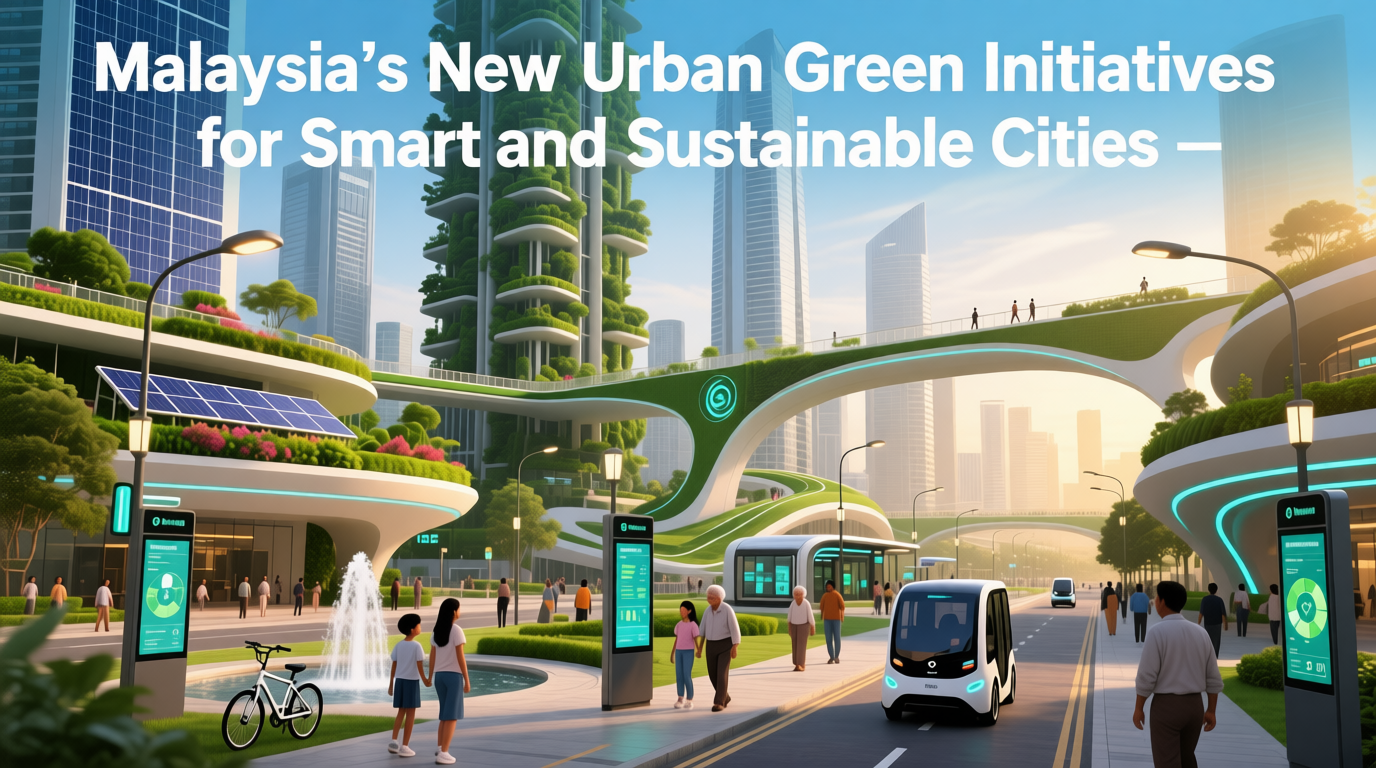

Malaysia embarks on a new era of sustainable urban development. Malaysia’s urban green initiatives are redesigning cities for a greener, healthier, and smarter future. The national vision aspires to net-zero emissions by 2050 through the adoption of renewable energy, green infrastructure, and community engagement. This integrated approach thus positions Malaysia to be aligned with urban growth and climate action while sustaining economic competitiveness.
National Policies Driving Urban Sustainability
The Twelfth Malaysia Plan, 2021–2025, outlines a plan for building “Prosperous, Inclusive, and Sustainable” cities. It mentions that smart city planning and green infrastructure are pivotal in enhancing the livability of cities with reduced environmental consequences. This also aligns Malaysia with various global climate commitments, such as the Paris Agreement.
The Low Carbon City Masterplan Malaysia (NLCCM) guides cities on ways of reducing carbon emissions, integrating green spaces, and implementing efficient energy infrastructures. It provides technical support for local authorities on how to plan low-carbon transport systems, improve energy management, and monitor environmental outcomes.
Complementing these initiatives, the Green Technology Master Plan Malaysia promotes low-carbon innovation and sustainable best practices across industries and households. Incentivizing green technologies, this plan supports the transition of Malaysia toward a resource-efficient economy.
One of the key pillars is renewable energy adoption. Malaysia has targets to achieve 40% renewable energy capacity by 2035, both from rooftop solar panels and large-scale solar farms. It will also introduce a carbon tax in 2026 aimed at pushing the industry toward greener practices and investment in low-carbon technologies.
Expanding Green Infrastructure in Malaysian Cities
Urban green infrastructure is increasingly becoming key to sustainable city planning. Pocket parks Malaysia and community gardens change underutilized spaces into recreational areas that improve air quality, offer shade, and bolster community engagement. Green roofs and vertical gardens temper urban heat and add visual appeal to the otherwise dense urban landscape of Kuala Lumpur.
Large-scale urban parks and ecological corridors constitute nature-based solutions: they protect biodiversity, reduce the risks of flooding, and support the connectivity of green spaces within cities. In Penang Island, rooftop gardens and green facades have received grant funding to support urban greening initiatives. Such projects contribute towards the improvement of local microclimates, enhance community participation, and serve to illustrate practical applications of Malaysia sustainable cities planning.
Nature-Based Solutions and Local Examples
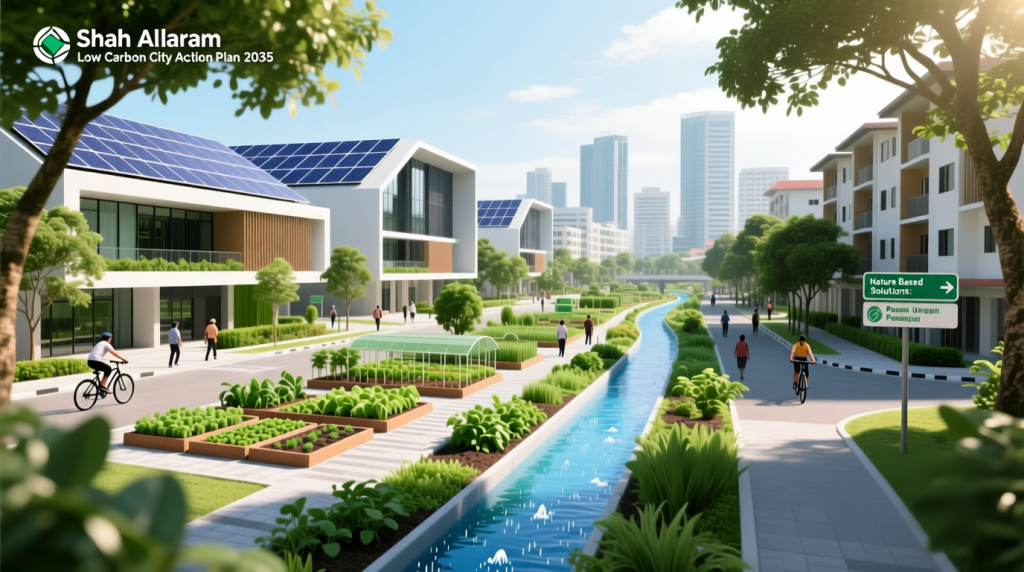
Shah Alam, in Selangor, meanwhile, acts as one of the best examples of the implementation of low-carbon urban strategies. Through the Shah Alam Low Carbon City Action Plan 2035, it has installed solar panels on public buildings, increased green spaces, and encouraged both urban farming and recycling. Community participation is key in making the residents responsible for the city’s sustainability goals. These reflect how national policies, such as the NLCCM, are being translated into concrete efforts at the city level.
Examples include the development of urban greening projects and the creation of pilot blue-green corridors in Penang that aim to manage stormwater, reduce urban heat, and enhance biodiversity. Combining ecological approaches with urban planning, such initiatives showcase how Malaysian cities serve as pilots for innovative nature-based solutions to climate challenges.
Renewable Energy and Carbon Reduction
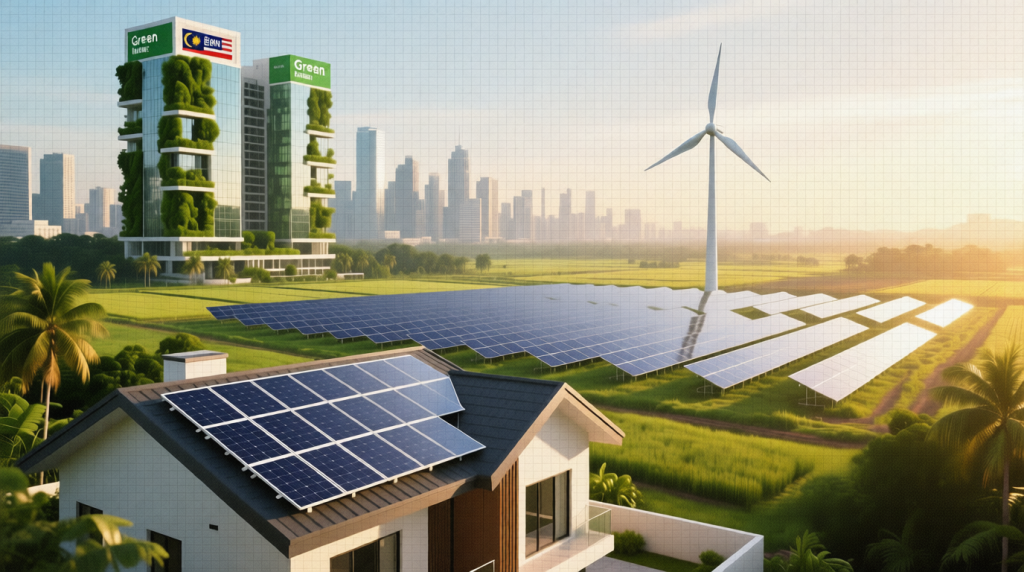
Renewable energy is at the center of Malaysia’s path to achieving net-zero by 2050. Incentives for solar panel installation in both homes and businesses support the government’s goal of increasing renewable energy capacity to 40% by 2035. Large-scale solar farms complement these efforts.
The carbon tax planned for 2026 is intended to urge industries with heavy greenhouse gas emissions to invest in cleaner technologies. This policy is widely expected to accelerate the transition toward a low-carbon economy while promoting competitiveness in the green sector.
The Green Building Index encourages energy-efficient construction in both residential and commercial projects. Buildings developed under the GBI will reduce energy consumption, thus lowering costs and providing a healthier living environment that will contribute toward sustainable urban development.
Sustainable Urban Mobility
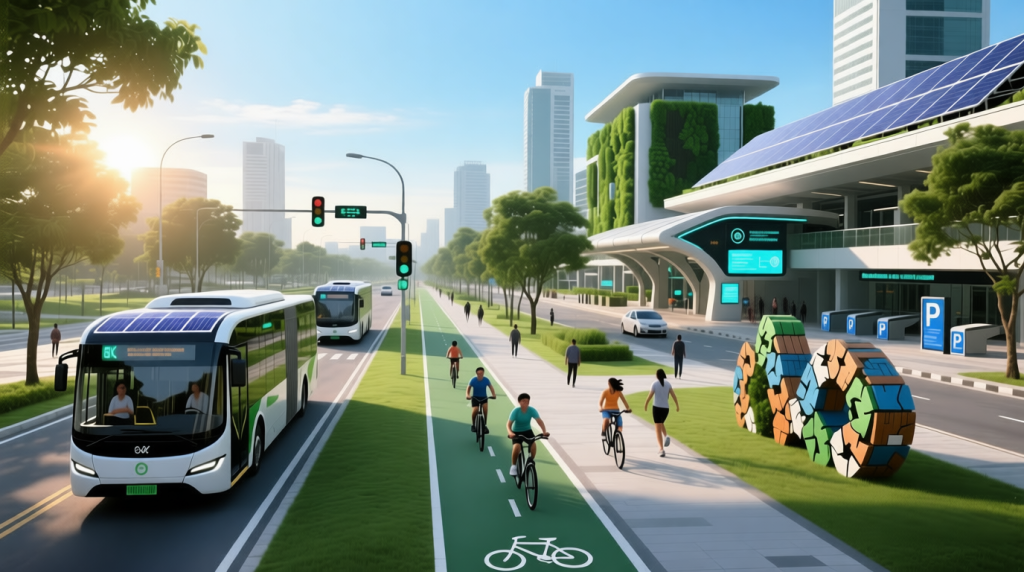
Transportation plays a very important role in Malaysia’s sustainable cities. Cities are introducing electric buses, expanding EV infrastructure, and upgrading their public transport systems to lower emissions. Cycling lanes and pedestrian-friendly pathways encourage active mobility, reducing reliance on private vehicles with concomitant health benefits.
Smart traffic management systems and intelligent parking platforms are already being installed to enhance the flow of traffic, decrease congestion, and slash idling times along with emissions. Such measures improve urban efficiency and complement low-carbon goals.
Community and Corporate Involvement
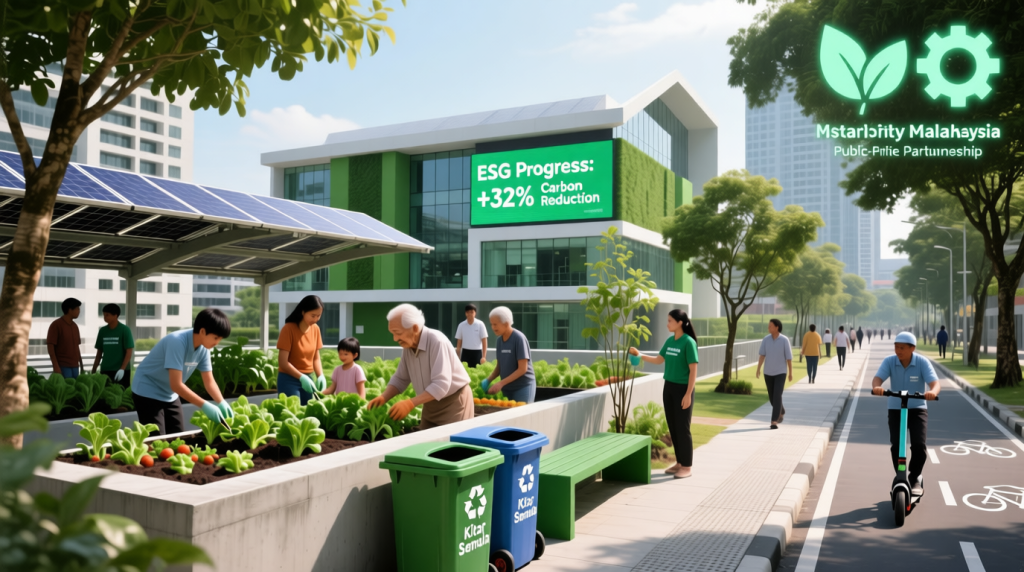
All urban green initiatives depend considerably on government action and, importantly, community engagement: citizens engage in urban farming, volunteer programs to green the city, and recycling. Grassroots efforts keep public spaces maintained and encourage habits of sustainability.
Companies help enhance ESG practices, such as investments in solar rooftops, energy-efficient office spaces, and green supply chains. Public-private partnerships consolidate resources towards impactful urban projects that hasten the adoption of measures within Malaysia’s smart city plan.
Through community and business involvement, Malaysia ensures that its urban green initiatives are inclusive, pragmatic, and in line with its objectives of long-term sustainability.
Frequently Asked Questions (FAQ)
Q1: What are Malaysia’s urban green initiatives?
These include pocket parks, green roofs, nature-based projects, renewable energy adoption, low-carbon transport, and city-level action plans guided by national frameworks.
Q2: What is the Low Carbon City Masterplan Malaysia?
The NLCCM guides cities in integrating green spaces, reducing carbon emissions, and working toward net-zero 2050 through sustainable urban planning and infrastructure.
Q3: When is Malaysia going to introduce a carbon tax?
The carbon tax is scheduled for 2026, in a bid to make high-greenhouse-gas-emissions industries move toward cleaner technologies.
Q4: Which cities have Green City Action Plans?
Examples of pilot programs and localized initiatives are Shah Alam and Penang Island, where emphasis is placed on renewable energy, urban greening, and climate-resilient infrastructure.
Conclusion
Urban green initiatives in Malaysia emphasize building cities smart, sustainable, and resilient. National frameworks, renewable energy policies, various pilot projects in cities like Shah Alam and Penang, and participation from the community in general will all contribute to achieving the 2050 net-zero target. With the integration of green infrastructure, nature-based solutions, and sustainable urban mobility, Malaysia is paving the way to creating liveable, inclusive, and globally competitive cities. These initiatives thus show that the country’s approach to urban sustainability is not a policy ambition, but a very practical roadmap for building the cities of tomorrow.