

Introduction
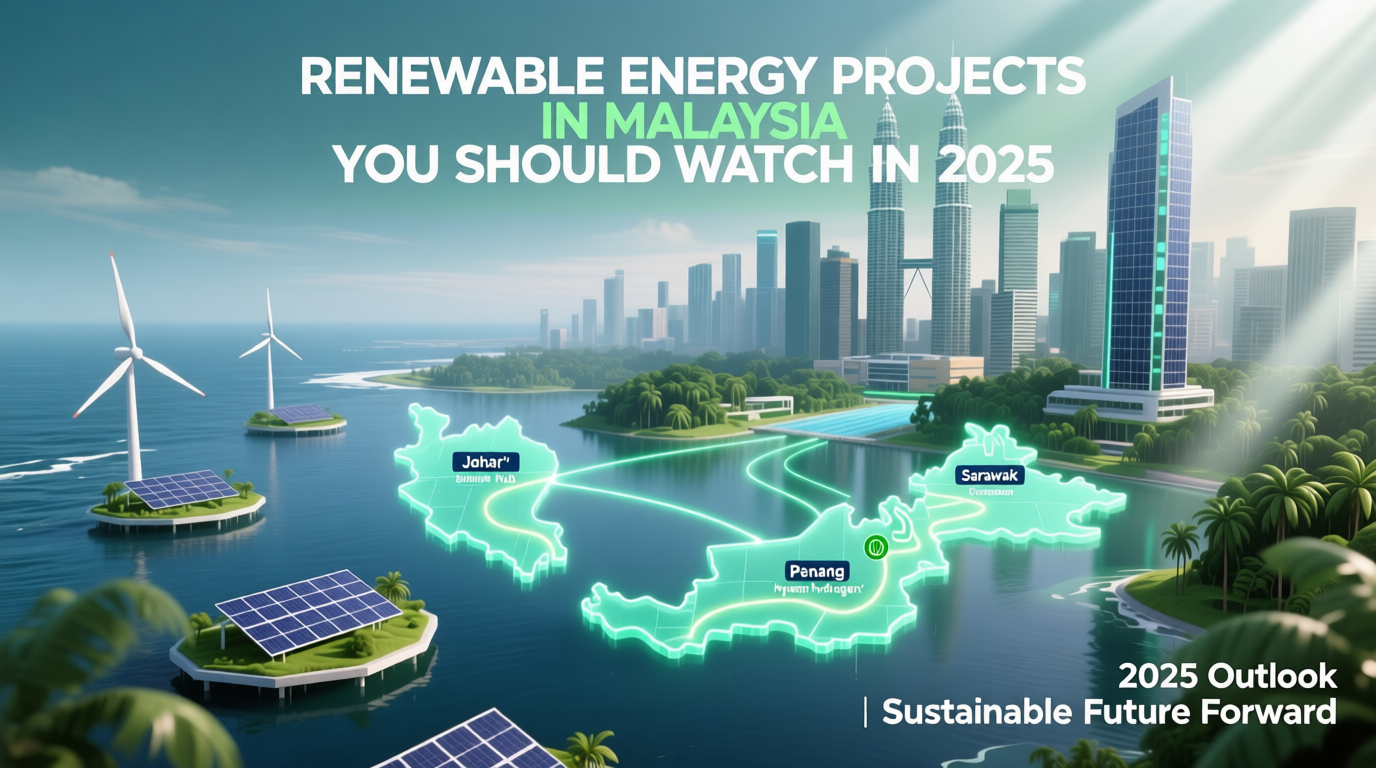
Malaysia is presently undertaking the transition to restructure its energy landscape in order to reduce dependence on fossil fuels and move closer to a sustainable future. It also aimed at enhancing, through renewable energy projects in Malaysia, the contribution of the national grid. 2025 will mark an important milestone towards achieving that target. From large-scale solar farms to innovative energy storage systems and regional power grid collaborations, Malaysia is well-placed to spearhead Southeast Asia’s renewable energy transformation.
Below are the most exciting projects in renewable energy within Malaysia that one should watch out for in 2025, their impact, and how each of them will contribute to the country’s long-term strategy for green energy.
Solar Power Driving Malaysia’s Clean Energy Growth
Solar ATAP Malaysia (Accelerated Rooftop Solar Adoption Programme)
Launched in December 2025, Solar ATAP offers rooftop solar installations at an affordable price, making this technology available to every household and business. The programme creates different kinds of incentives, such as tax rebates, and simplifies all the application processes at the national level. It is expected to significantly raise the level of solar power’s share within Malaysia renewable energy projects over the next few years.
Large Scale Solar Malaysia (LSS) Projects
The Large Scale Solar (LSS) program plays a significant role in increasing Malaysia’s solar capacity. Led by Tenaga Nasional Berhad (TNB) Renewables, major projects include:
- Sepang Solar Farm was one of the earliest large-scale solar projects developed in Malaysia.
- Bukit Selambau Project, Kedah – supplying power to the northern region.
- The Kerian Solar Project in Perak is a high-capacity photovoltaic project that exemplifies Malaysia’s commitment to green infrastructure.
These Large Scale Solar Malaysia projects strengthen the national grid and help attain renewable energy goals in the country.
Net Energy Metering and SELCO Schemes
Meanwhile, the Net Energy Metering allows households and businesses to generate their own solar power and feed excess energy back into the grid. Similarly, schemes like SELCO help businesses maximize the usage of solar. Both initiatives are important towards the growth of renewable energy projects in Malaysia.
Expanding Battery Energy Storage Systems: BESS Malaysia
Intermittency, the main hindrance to using renewable energy, is an issue: solar output varies with the weather; hydropower depends on rainfall. Malaysia is doing something about it through Battery Energy Storage Systems, or BESS for short.
MYBESS Prototype
In 2023, the country announced its first MYBESS prototype, which is locally designed and assembled, showcasing Malaysia’s innovation in energy technologies while reducing dependency on imported systems.
NaS Battery Deployment in Kedah
In 2024, Malaysia deployed a Sodium-Sulfur battery system in Kedah. This advanced energy storage stabilizes the grid and is yet another leap in adopting high-performance energy storage technologies in Malaysia renewable energy projects.
Sarawak Energy BESS Project
In East Malaysia, a 60MW/82MWh BESS facility was commissioned by Sarawak Energy in Sejingkat, Kuching. This large-scale project enhances grid stability and supports renewable energy projects in Malaysia.
Malaysia will significantly expand the capacity of BESS by 2030 and make it a crucial enabler in the clean energy transition of the country.
Malaysia’s Role in the ASEAN Power Grid (APG)
Malaysia is also promoting renewable energy through regional cooperation. The ASEAN Power Grid is targeted to interlink the countries of Southeast Asia through an integrated network of clean energy.
TNB is actively involved in cross-border interconnection projects that will enable it to share surpluses of renewable energy across the region. This will also open avenues for Malaysia to export clean energy, attract foreign investment, and reinforce its position as a regional green energy hub through the APG. ASEAN Power Grid Malaysia is critical in that endeavor.
Hydropower Projects Malaysia
East Malaysia, especially Sabah and Sarawak, has a vast potential for hydropower resources due to its hilly terrains and river systems.
Sarawak Energy leads hydropower development, balancing Malaysia’s energy mix. Hydropower projects in Malaysia provide firm and reliable energy that supplements solar and other renewable energy sources, which can be expanded to supply local demand in these regions, and go on to further support Malaysia’s contribution to the ASEAN Power Grid.
Biomass Energy Malaysia and Waste-to-Energy Initiatives
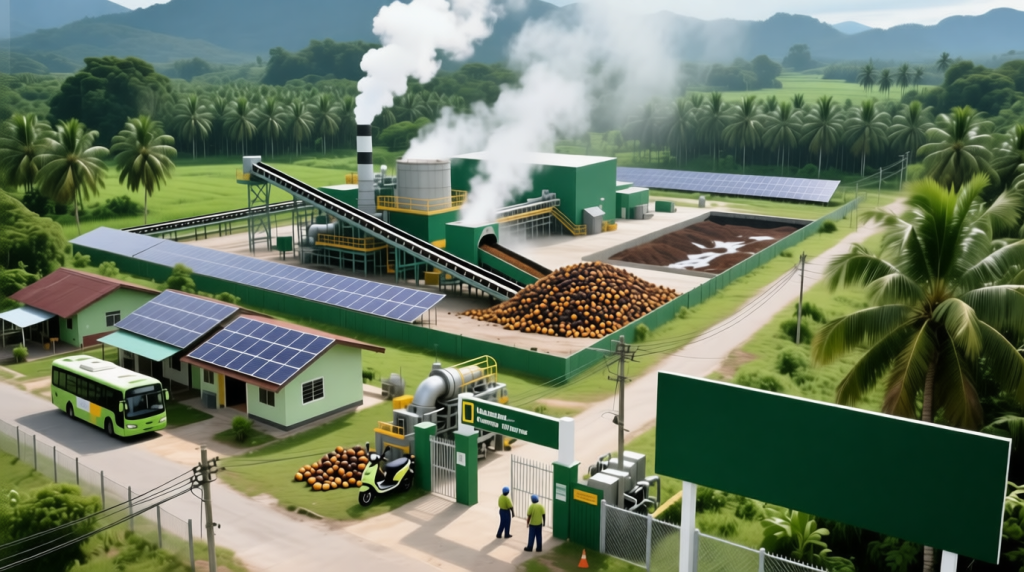
Biomass and waste-to-energy projects are the main players in Malaysia’s agricultural sector. The process of energy conversion from agricultural residues, such as palm oil wastes, rice husks, and timber by-products, enables Malaysia to manage its wastes while generating renewable electricity.
These are indeed promising pilots, both in Sabah and on the Peninsular. Biomass energy in Malaysia allows for diversification of its renewable energy portfolio and encourages a circular economy whereby waste is turned into value. It supports rural electrification by allowing energy access to the far-flung communities.
FAQ – Renewable Energy in Malaysia 2025
Q1: What is Solar ATAP and how does it benefit Malaysians?
Solar ATAP is an initiative taken by the Government of India, launched in December 2025, to fast-track rooftop solar adoption. It provides incentives and simplifies the process for households and businesses to install solar panels, reducing their electricity bills with the help of clean energy.
Q2: In what way does Malaysia’s BESS expansion improve energy security?
In Malaysia, BESS stores excess renewable energy to ensure a stable power supply during the fluctuations in solar or hydropower generation, hence reducing reliance on fossil fuel backup systems.
Q3: Which regions have the most hydropower potential?
With its hilly terrain and river systems, Sabah and Sarawak boast of the highest potential in the country for hydropower generation. The Malaysia hydropower projects are thus developed to meet both domestic and regional energy needs.
Q4: What is Malaysia’s role in the ASEAN Power Grid?
Malaysia, via TNB, is one of the region’s most key members of the ASEAN Power Grid. Improving cross-border connectivity will enable it to share renewable energy with its immediate neighbours, and establish its position as a clean energy hub within South East Asia.
Q5: Are there renewable energy incentives for households in 2025?
Yes, via Solar ATAP, Net Energy Metering, and SELCO, households are able to generate solar energy and cut electricity costs while selling excess power back into the grid.
Why These Renewable Energy Projects Matter
Taken together, these Malaysian renewable energy projects should bring the country close to the 70% threshold of renewable energy capacity for 2050 and support the green economy through green jobs, investment, and technology innovation. With solar, hydropower, biomass, and energy storage, Malaysia secures its energy future while its position in South East Asia’s green energy transition is further cemented.
Conclusion
2025 is a transformative year for Malaysia’s renewable energy sector, from Solar ATAP rooftops to LSS farms to BESS expansion, hydro growth, and biomass innovation-the country is building itself a cleaner and resilient energy system. With Malaysia playing a central role in the ASEAN Power Grid and accelerating domestic renewable energy projects, households, businesses, and investors alike have the opportunity to take part in building a sustainable future. It is an opportunity that comes with economic benefits and a shared responsibility to support Malaysia’s journey toward a greener nation.